










Madurai and Coimbatore metro projects suffer another setback from the Centre.
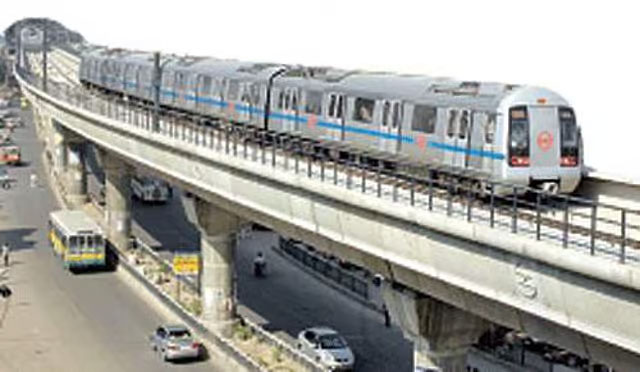
Chennai: Disappointing news has once again emerged regarding the proposed metro rail projects in two of Tamil Nadu’s major cities—Madurai and Coimbatore. Reports indicate that the Central Government has once again declined to approve the metro rail projects proposed for these cities. This is seen as a significant setback for the state government’s ambitious urban transport plan. While a detailed official response is awaited, fresh discussions regarding the future of the projects have already begun.
Metro rail services in Tamil Nadu were first introduced in the capital, Chennai. Chennai Metro has been operating successfully since 2015 and has become a vital component of the city’s public transport system. Currently, the Chennai Metro operates along two major corridors, with expansion work proceeding rapidly. Plans are underway to extend the network to four major routes in the near future, which will provide millions of commuters with superior and faster transportation facilities.
Encouraged by the success of the Chennai Metro, Chennai Metro Rail Limited (CMRL) planned to introduce metro services in other major cities across the state. As part of this initiative, Detailed Project Reports (DPRs) were prepared for rapidly developing metropolitan areas like Madurai and Coimbatore. These reports proposed the development of metro networks by taking into account current and future traffic demands, population growth, urban expansion, and economic activities in both cities.
The DPRs prepared by CMRL were submitted to the Tamil Nadu government. Recognizing the utility and necessity of the projects, the state government granted its approval last year. Subsequently, the proposals were forwarded to the Central Government for final approval. It was anticipated that once central approval was secured, the financial and administrative processes would advance, paving the way for the commencement of construction work.
However, recent reports indicate that the Central Government has once again declined to approve the proposal. Consequently, the launch of metro projects in both cities has now been cast into uncertainty. It is believed that the central government may have raised objections regarding the project’s cost, financial viability, passenger volume projections, and other technical aspects; however, there has been no official confirmation of these specific reasons yet.
Madurai and Coimbatore are major industrial, educational, and commercial hubs in Tamil Nadu. Coimbatore, often referred to as the state’s industrial capital, sees a large number of people traveling daily for work, business, and education. Meanwhile, Madurai serves as a key religious, cultural, and tourism center in southern Tamil Nadu. Given the constantly increasing traffic and vehicle numbers in both cities, the metro rail project was viewed as a future necessity.
Urban transport experts believe that launching metro services in these cities would alleviate road traffic congestion, reduce pollution, and provide residents with safe, fast, and convenient public transport. Furthermore, the metro project was expected to boost the local economy, generate employment, and foster urban development.
All eyes are now on the next steps the state government might take regarding the project. It is speculated that the Tamil Nadu government could re-engage with the Centre to present its arguments in favor of the project. If necessary, the project report could be revised and resubmitted for approval.
Meanwhile, reactions from the political sphere are also expected. The opposition and various social organizations argue that expanding modern transport facilities in rapidly growing cities is the need of the hour, and that the central and state governments should collaborate to find a solution.
Transport experts anticipate that population and traffic pressures in cities like Madurai and Coimbatore will intensify in the coming years. Consequently, if a modern public transport system is not developed in time, issues such as traffic congestion, pollution, and prolonged travel times could worsen significantly.
For now, the news that the Madurai and Coimbatore metro projects have not received approval from the central government has dashed the hopes of the residents in these cities. It remains to be seen what strategy the state government adopts to advance the project and whether this ambitious plan will eventually secure the Centre’s green light. Until then, the citizens of both cities will continue to wait for the modern metro service.