










BJP’s ‘Mission 60 Plus’ for Uttarakhand 2027: Deliberations on election strategy at the working committee meeting.
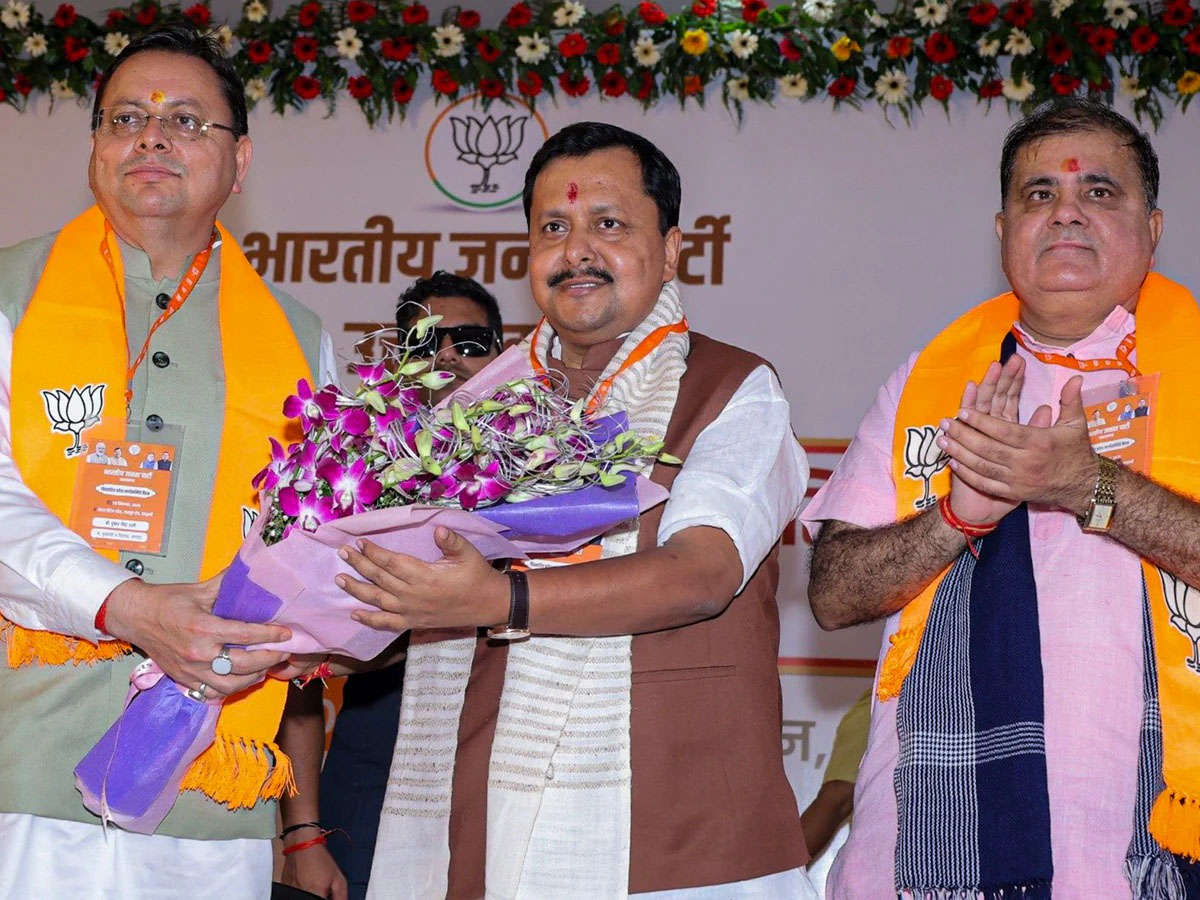
Dehradun. The Bharatiya Janata Party (BJP) has signaled an acceleration in its election preparations for the 2027 Uttarakhand Assembly elections. During the state BJP working committee meeting, the party deliberated on its direction and priorities for the upcoming polls while extensively discussing the challenges facing both the organization and the government. Held in the presence of National General Secretary Nitin Naveen, the meeting was attended by Chief Minister Pushkar Singh Dhami, State President Mahendra Bhatt, senior party leaders, and office-bearers from across the state.
The meeting primarily focused on fully preparing the organization for the elections and effectively communicating the government’s achievements to the public. With the goal of winning over 60 assembly seats in 2027, the party leadership emphasized activating the organization right down to the booth level immediately. The working committee also conveyed the message that election preparations should be pursued as a continuous campaign rather than waiting until the elections are officially announced.
Emphasis on Communicating Government’s Work to the Public
For the BJP, the 2027 election will be an opportunity to secure public endorsement of the incumbent government’s performance. The working committee discussed strategies to disseminate information about government schemes and decisions to the public on a large scale. The party aims to establish direct communication with the beneficiaries of central and state government schemes and integrate them into the organizational fold.
The BJP is likely to make the decisions taken by the Pushkar Singh Dhami-led government a cornerstone of its election campaign. Key issues expected to feature prominently include the Uniform Civil Code (UCC), women’s empowerment, development of religious sites and the tourism sector, employment generation, investment, and infrastructure projects.
Efforts to Strengthen the Organization at the Booth Level
For ‘Mission 60 Plus,’ the BJP will place the greatest emphasis on organizational strength. The working committee stressed the need to activate booth committees, enhance the effectiveness of ‘Panna Pramukhs’ (page-in-charge officials), and maintain regular dialogue with party workers. The party’s objective is to ensure an active organizational presence at every single booth. Emphasis will also be placed on formulating region-specific strategies, taking into account the distinct political landscapes of the state’s mountainous and plain areas. Issues such as migration, employment, roads, healthcare, and education are critical in the hill districts, whereas law and order, industrial development, employment, and urban amenities are likely to shape the electoral discourse in the plain districts.
The Challenge of Surpassing the 2022 Performance
The BJP’s biggest political challenge lies in improving upon its performance from the previous assembly election. In the 70-member Uttarakhand Assembly, the BJP won 47 seats in 2022, while the Congress secured 19. Although the BJP retained power, its performance was weaker compared to 2017, when the party had won 56 seats.
Consequently, to achieve the target of ’60-plus’ seats in 2027, the BJP must win at least 13 additional seats compared to 2022. This goal is considered highly challenging for the party. To achieve it, the party needs to improve its performance in constituencies where the opposition posed a stiff challenge in the last election.
Focus on Weak Constituencies
The BJP’s strategy is likely to place special emphasis on identifying weak assembly constituencies and strengthening the party organization there well in advance. The Congress’s strong presence in plain districts like Haridwar and Udham Singh Nagar has been a challenge for the party. Meanwhile, direct contests between the BJP and the Congress were also witnessed in several constituencies across the Kumaon region.
The party also faces the challenge of addressing potential public resentment against incumbent MLAs at the local level. After a prolonged period in power, the public evaluates the performance of both the government and local representatives. Therefore, during ticket distribution, the BJP may need to consider factors such as winnability, local political dynamics, and the MLA’s track record.
Preparing to Counter Opposition Issues
Congress and other opposition parties are likely to prominently raise issues such as unemployment, inflation, migration, irregularities in recruitment exams, and youth employment in the upcoming election. The BJP will need to prepare its responses and political narrative regarding these issues well in advance. A key point that emerged during the Working Committee’s deliberations was that the opposition’s allegations must be countered not merely at the state level, but down to the district, mandal (block/cluster), and booth levels. To this end, efforts to inform party workers about the government’s schemes and achievements could be intensified.
The ‘Dhami Factor’ and Organizational Synergy
Chief Minister Pushkar Singh Dhami’s image is likely to play a pivotal role in the BJP’s strategy for the 2027 elections. The party organization will play a crucial role in conveying the government’s decisions to the public while effectively communicating the underlying political message. Consequently, emphasis was placed on fostering better coordination between the government and the organization.
The state Working Committee meeting, held in the presence of National General Secretary Nitin Naveen, is considered significant in this context. The central leadership’s priority is clear: the BJP must not only retain power in Uttarakhand but also achieve a substantial increase in its seat tally.
A Test on Ten Fronts for the ’60-Plus’ Goal
The BJP faces several political and organizational challenges on the path to its ‘Mission 60-Plus.’ These include strengthening weak constituencies, countering the potential polarization of opposition votes, addressing public resentment against incumbent MLAs, ensuring balance in ticket distribution, and curbing factionalism within the organization.