










BJP preparing for a hat-trick in Uttarakhand with the help of nationalism, development and social harmony
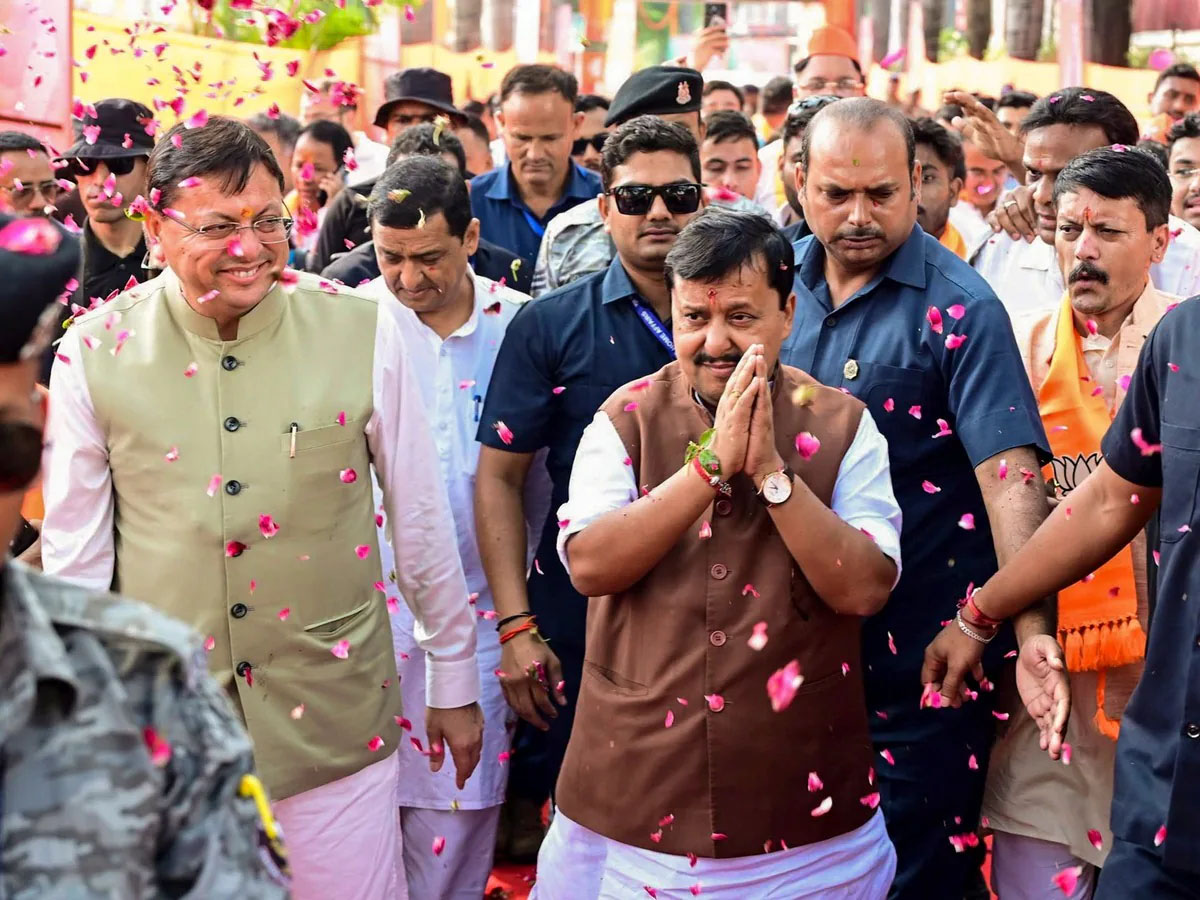
Dehradun. Leveraging a strong opening based on nationalism, the ‘power-play’ of the Modi model of development, and the achievements of the ‘double-engine’ Dhami government, the Bharatiya Janata Party (BJP) has begun strategizing to form the government in Uttarakhand for a third consecutive term. BJP leader Nitin Navin has signaled party workers to gear up for the upcoming elections by weaving together these three key political issues. Visiting Uttarakhand for the third time since assuming his national role, Navin chose Haldwani as the focal point for his political strategy this time.
The manner in which Nitin Navin highlighted nationalism, development, and social harmony during the event in Haldwani offers a glimpse into the BJP’s future electoral strategy. The party intends to take the performance of the Narendra Modi government at the Centre and the Pushkar Singh Dhami government in the state to the public. Simultaneously, issues concerning religious-cultural identity, national security, and social unity will be integrated into the electoral discourse.
The choice of Haldwani is seen as more than just a venue for an organizational event; the Kumaon region holds a significant place in Uttarakhand’s politics. Strengthening the party organization and keeping workers united in this region is a crucial component of the BJP’s election strategy. The party is also preparing to turn the political controversy that arose following the so-called ‘purification’ event at Ramlila Maidan on August 10 to its advantage.
Nitin Navin targeted the Congress by linking this episode to themes of social harmony and respect for religious-cultural values. He conveyed to the workers that while the BJP would steadfastly adhere to its ideological stance, it would also focus on bringing various sections of society together. The party aims to counter allegations of polarization leveled by opposition parties by emphasizing social unity and harmony.
The BJP leader launched a scathing attack on Congress National President Mallikarjun Kharge and the Leader of the Opposition in the Lok Sabha, Rahul Gandhi. Using cricketing parlance, he bowled a political ‘bouncer’ at the Congress leadership, making it clear that the BJP would adopt an aggressive rather than a defensive strategy in the upcoming elections. Preparations are underway to corner the opposition by combining national issues with the state’s local political dynamics. Prime Minister Narendra Modi’s popularity and the government led by Chief Minister Pushkar Singh Dhami are considered the BJP’s greatest strengths in Uttarakhand. The party has been presenting the synergy between the central and state governments to the public as a “double-engine government.” Plans are underway to prominently highlight the expansion of infrastructure—spanning roads, railways, healthcare, tourism, pilgrimage facilities, and border areas—during the election campaign.
The BJP leadership believes that showcasing the Modi government’s schemes alongside the Dhami government’s decisions could yield electoral benefits. By linking ongoing central projects in the state to the “Modi model of development,” the party aims to convey that having the same party in power at both the Centre and the state is essential for Uttarakhand’s progress. Party workers may be tasked with taking information about these schemes directly to households.
Nationalism will also remain a key pillar of the BJP’s strategy. Uttarakhand is known for its strong military tradition, with a large number of its residents serving in the armed forces and paramilitary organizations. Issues related to national security, respect for soldiers, and the development of border villages play a significant role in the state’s politics. The BJP intends to take these issues to the public alongside its own achievements.
Additionally, the party is preparing to leverage social harmony as a crucial political tool. The BJP aims to expand its outreach across various caste, social, and regional groups. Voter segments such as Scheduled Castes, Scheduled Tribes, Other Backward Classes (OBCs), women, the youth, and ex-servicemen are likely to remain central to the party’s strategy. Direct engagement with these groups will be fostered through organizational meetings and public outreach campaigns.
Nitin Navin’s visit to Haldwani is seen as a significant step toward energizing party workers and mobilizing the organization for the upcoming elections. He indicated that merely listing the government’s achievements would not suffice; there is also a need to strengthen the organization at the booth level, address any grievances among party workers, and maintain continuous contact with the public. The party may devise a plan to establish direct communication with voters at every booth.
Maintaining a political balance between the Kumaon and Garhwal regions will also remain crucial for the BJP. A strong performance in both regions is essential to secure power in the state. By sending a strategic message from Haldwani, the party has signaled that it will place special emphasis on the Kumaon region. A future course of action can be formulated here after assessing local issues, organizational dynamics, and the opposition’s standing.
Meanwhile, the Congress will also attempt to corner the BJP government on issues such as inflation, unemployment, migration, law and order, and disaster management. Consequently, the BJP will need to address these concerns alongside its claims of development. Launching an attack on Kharge and Rahul Gandhi, Nitin Naveen made it clear that the party would continue to target the Congress at the national leadership level as well.
The BJP has already won two consecutive assembly elections in Uttarakhand. Now, the party faces the challenge of achieving a hat-trick of victories. Securing a third consecutive win will not be easy.