










Controversy over incorrect general knowledge questions; major errors regarding facts about the national bird and the state.
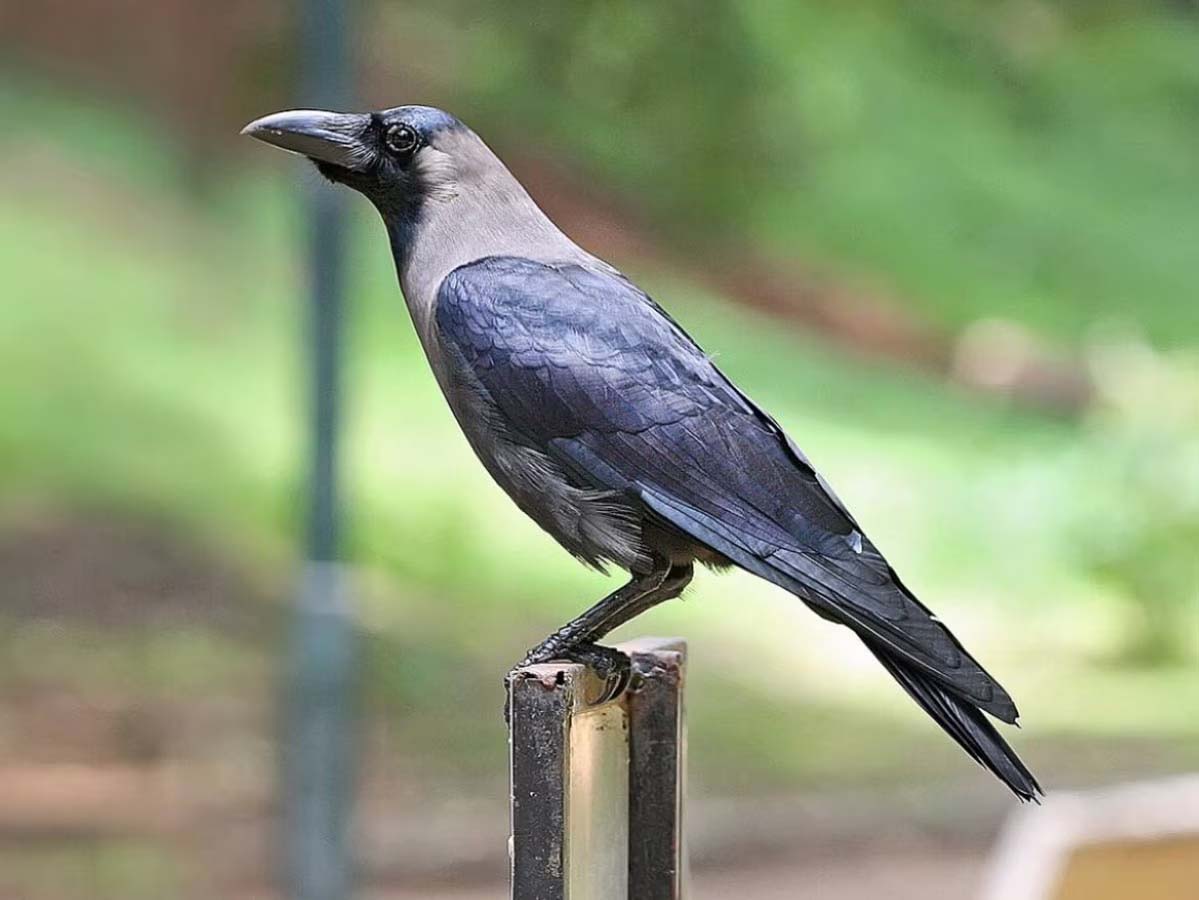
New Delhi. The credibility of questions related to education and competitive examinations is always considered crucial in the country. However, certain questions and facts have recently come to light that would astonish any educated person. Errors concerning basic information were observed in these general knowledge questions.
The most shocking claim among these is that the crow is the country’s national bird, whereas India’s national bird is the peacock. Similarly, another fact incorrectly identifies Uttarakhand as the country’s smallest state in terms of area; in reality, Goa is India’s smallest state by area. Furthermore, Pakistan is cited as the country sharing the longest border with India, a claim that is also incorrect.
The emergence of such erroneous facts has raised questions about how such significant errors occur during the preparation of general knowledge material. This is particularly concerning because when such information reaches students, aspirants preparing for competitive exams, and the general public, it can directly impact their knowledge and preparation.
The peacock is India’s national bird. It was declared the national bird in 1963. The peacock is part of the national identity due to its beauty, cultural significance, and association with Indian traditions. Consequently, identifying the crow as the national bird instead is considered a serious factual error.
Likewise, the information claiming Uttarakhand to be the country’s smallest state is incorrect. Uttarakhand was established in the year 2000 and holds a significant place among the Himalayan states. In terms of area, Goa is India’s smallest state, with a land area significantly smaller than that of Uttarakhand.
Regarding India’s international borders, the country shares its longest border with Bangladesh. The border between India and Bangladesh spans approximately 4,096 kilometers, which is longer than the border shared with any other neighboring country. While India does share a long border with Pakistan, Pakistan is not the country with which India shares its longest border.
Experts emphasize that verifying facts is essential when preparing general knowledge material. In today’s digital age, misinformation can spread rapidly. Therefore, the authenticity of facts published in books, on websites, and in educational materials must be verified.
General knowledge is a crucial subject for students. Competitive examinations—such as those conducted by the UPSC, State Public Service Commissions, and banking bodies, as well as other government exams—frequently feature fact-based questions. Consequently, incorrect information can adversely affect a student’s performance.
Educationists believe that general knowledge is not merely a matter of rote memorization; acquiring accurate and verified information is essential. One should verify the source of any fact before accepting it as true, especially when it pertains to examinations or career prospects.
With the increasing use of social media and the internet, a vast number of people rely on online content. This has heightened the risk of misinformation spreading. Experts advise sourcing information from government websites, reliable books, and verified channels.
These instances of factual errors have reignited the debate regarding the need to strengthen quality control and verification processes for educational materials. Even a minor error in general knowledge can mislead lakhs of students.
Currently, there is public resentment regarding such erroneous claims. People argue that there should be absolutely no negligence concerning significant topics such as national symbols, states, and international borders.