










Delhi faces double whammy of cold and pollution
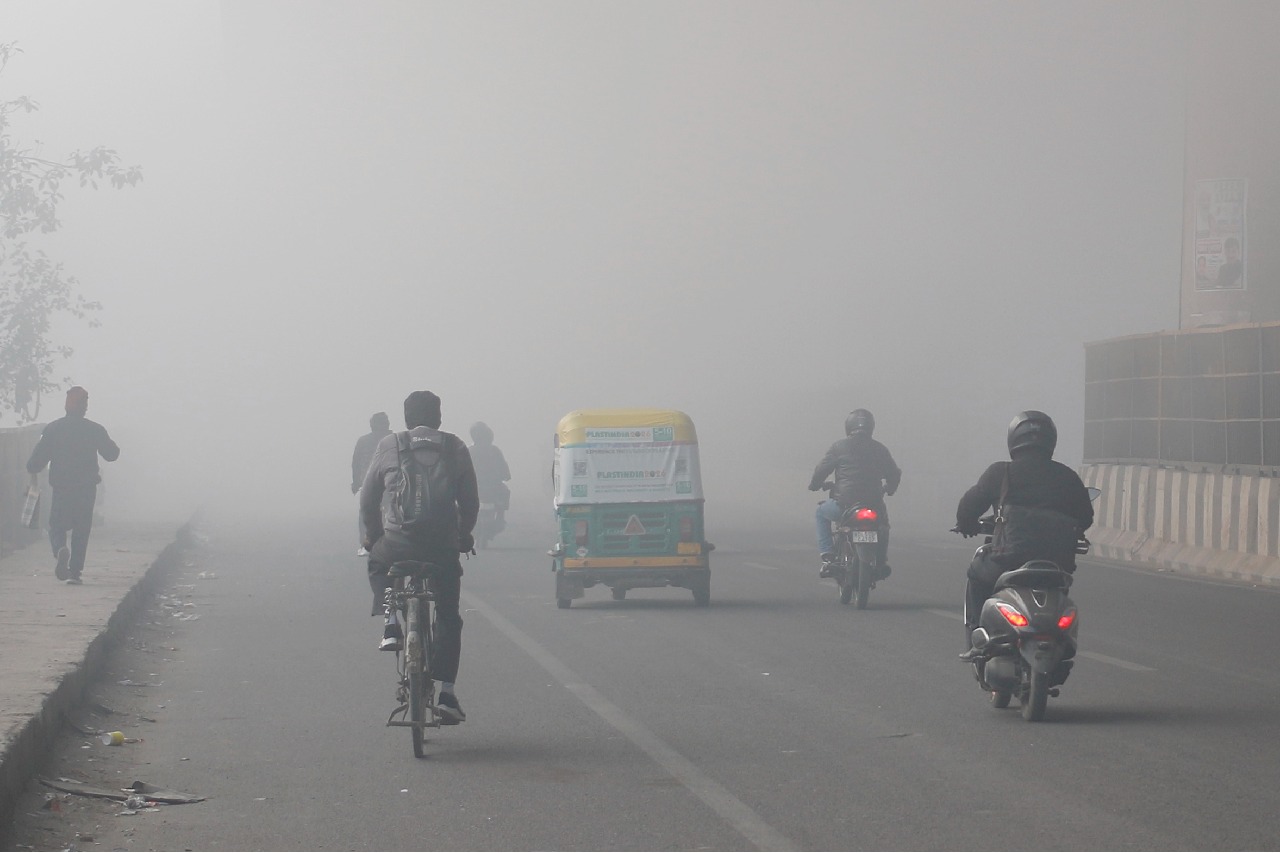
New Delhi: Delhi woke up to another morning under a thick blanket of pollution and bitter cold. Fog and low temperatures tightened their grip on the capital on New Year’s Day, keeping air density in the “very poor” category.
According to the latest data from the Central Pollution Control Board (CPCB), Delhi’s Air Density Index (AQI) stood at 372, indicating consistently high pollution levels across the city.
The cold and foggy weather worsened the situation, as low wind speeds and low temperatures prevented pollutants from dispersing, allowing fine particulate matter to linger in the air for longer.
Several air density monitoring stations across Delhi reported hazardous temperatures. Anand Vihar recorded an AQI of 418, while Wazirpur was slightly behind with 414.
Rohini recorded an AQI of 413 and Ashok Vihar 392.
An AQI of 381 was recorded in RK Puram, 371 in ITO, 377 in Chandni Chowk, and 384 in Siri Fort.
Poor air quality also persisted in cities surrounding the National Capital Region.
An AQI of 364 was recorded in November, while Ghaziabad ranked fifth with an AQI of 338. Greater Noida ranked sixth with an AQI of 336; all of these places fall in the very poor air quality category.
The India Meteorological Department (IMD) has predicted generally cloudy skies on Thursday with the possibility of very light to light rain at some places.
The weather department has warned people of light fog in many places and dense fog in some areas during the morning, as well as cold weather in some areas during the day.
Notably, Wednesday recorded the coldest day in Delhi since 2019. The maximum temperature was 14.2 degrees Celsius, 6.2 degrees below the seasonal average.
The low daytime temperatures, combined with high humidity levels and stagnant air, have caused significant inconvenience to residents, and the air quality across the region has deteriorated rapidly.
Meanwhile, a recent analysis by the Centre for Research on Energy and Clean Air (CREA) shows that Delhi will remain the most populous city in the National Capital Region in 2025, followed by Ghaziabad and Noida.
Although the average PM2.5 concentration in Delhi decreased slightly compared to last year, the average pollution level during the crucial period from October to December increased slightly compared to 2024.
The study revealed that PM2.5 levels at all 40 monitoring stations in Delhi were at least 1.8 times, or almost double, the prescribed index standard.
The remaining 14 out of 29 cities in the NCR had PM2.5 data coverage of more than 75% in 2025, indicating a lack of air quality monitoring across the region.