










Dilapidated road proves fatal; elderly person dies in ambulance.
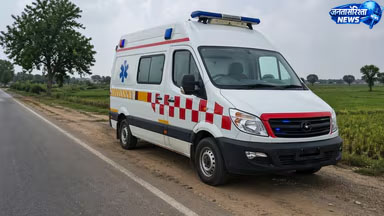
Jamshedpur: Jharkhand’s healthcare system and the state of basic amenities in rural areas have once again come under scrutiny. A 65-year-old man from the Patamda block of East Singhbhum district died inside an ambulance while being transported to the hospital. His family alleges that his life could have been saved had the road conditions been better and timely medical care provided. Following this incident, there is growing resentment among the local population regarding healthcare services and road infrastructure.
The deceased has been identified as Santosh Kumbhakar (65), a resident of Jodsa village in Patamda block. Reports indicate that his health suddenly deteriorated on Saturday. His family immediately contacted the state government’s ‘108’ emergency ambulance service. Upon receiving the call, the ambulance arrived at the village and departed for the hospital in Macha with Santosh Kumbhakar at approximately 1:50 PM.
According to the family, the 10-kilometer stretch from the village to the hospital is in a dilapidated state. Large potholes, an uneven surface, and the poor condition of the road forced the ambulance to move at a very slow pace. Constant jolts during the journey and the resulting delay caused the patient’s condition to worsen critically.
It is reported that Santosh Kumbhakar passed away inside the ambulance before reaching the hospital. Upon arrival, doctors declared him dead. The family was devastated by the incident, maintaining that his life might have been saved had the road been in good condition and the ambulance reached the hospital on time.
This incident has once again raised serious questions regarding the availability of healthcare services and the actual state of road connectivity in rural areas. Locals state that the region’s poor roads have long been a source of trouble. Conditions worsen significantly during the monsoon season, making it extremely difficult to transport patients, pregnant women, and others in need to the hospital in time. Villagers have alleged that demands for road repairs and improved healthcare facilities have been repeatedly raised with the administration and elected representatives, yet no concrete action has been taken. They state that despite repeated complaints, the situation remains unchanged, and ordinary people are paying the ultimate price—losing their lives.
Locals point out that even basic healthcare facilities are inadequate in many villages across the area. Critically ill patients must be transported to distant hospitals, a process made even more difficult by the poor condition of the roads. Consequently, people are unable to fully benefit from emergency medical services.
Health experts believe that the success of emergency medical services depends not merely on the availability of ambulances but equally on good roads, timely transport, and accessible health centers. A failure in any of these links can delay patient treatment—a delay that often proves fatal.
Following this incident, local residents have demanded immediate road repairs and the strengthening of healthcare facilities in the region. They urge the government to prioritize road and medical infrastructure in rural areas to ensure that no other family has to face such a tragedy in the future.
However, the administration has not yet issued a detailed official statement regarding the matter. It is expected that the concerned officials will investigate the incident to determine whether there was negligence at any level or if the poor road conditions hindered the timely transport of the patient to the hospital.
This incident is not merely a personal tragedy for one family; it also highlights the broader challenges regarding healthcare services and infrastructure in rural areas. Experts suggest that better coordination between road networks, transport systems, and healthcare services could significantly prevent such incidents.
For now, the family of Santosh Kumbhakar is in deep mourning following his passing. Meanwhile, villagers hope that this incident will serve as a wake-up call for the administration and the government, prompting them to take immediate, concrete steps to improve the region’s road and healthcare infrastructure, ensuring that no patient loses their life in the future due to a lack of timely medical treatment.