









Bengal Panchayat elections: Suvendu Adhikari filed a caveat in the Supreme Court
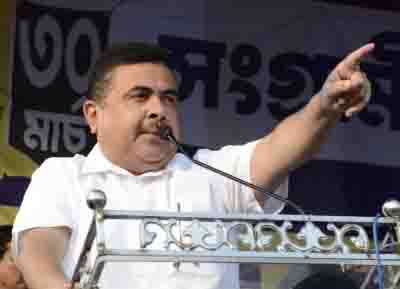
Kolkata (IANS) | Anticipating the West Bengal government and the State Election Commission to challenge the Calcutta High Court order on the deployment of 82,000 central armed forces personnel in the Supreme Court, Leader of the Opposition in the state assembly Suvendu Adhikari on Thursday filed a caveat in the apex court. Did. Although there has been no official indication from the state government or the state election commission to approach the Supreme Court, state commissioner Rajeev Sinha was busy discussing with legal experts in his office till late Wednesday night.
Meanwhile, a contempt of court petition against the State Election Commission is scheduled to be heard by a division bench of the Calcutta High Court on Thursday and a verdict is expected on the same day.
On Wednesday, ordering the deployment of a minimum of 82,000 central armed forces for the rural civic body elections, Calcutta High Court Chief Justice T.S. Sivaganam’s bench said the number given by the court was on the lines of the deployment of central forces personnel in the 2013 rural civic body polls ensured by the then State Election Commission, Meera Pandey.
The court has directed the State Election Commission to apply to the Union Home Ministry for 82,000 personnel within 24 hours. On Wednesday, the State Election Commission gave a requisition to the Union Home Ministry for deployment of only 22 companies or about 2,200 personnel of the Central Armed Forces.
On Wednesday, the Bench criticized the State Election Commission in unprecedented terms and also questioned the impartiality of the Commission.
Justice Sivaganam said, after so many developments, I am constrained to say that the impartiality of the State Election Commission remains in question. It is most unfortunate that a contempt of court petition has been filed against the State Election Commissioner. I request you to comply with the orders of the court.
He also advised State Election Commissioner Rajeev Sinha that if he is unable to bear the pressure of his post, he should leave his chair.
–IANS