









Jalandhar: The end of the year, floods and the struggle for survival

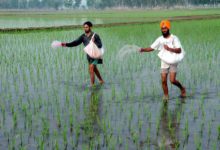
Jalandhar: The year 2025 proved to be extremely difficult for farmers in Punjab, as floods, rising debt pushed thousands into distress. Large sections of the state’s agrarian economy came under pressure, particularly in riverine and low-lying areas where repeated crop losses left farmers struggling to survive.
The most severe setback came in August, when heavy flooding inundated vast stretches of farmland in Sultanpur Lodhi and surrounding areas, striking just as farmers were preparing to harvest their standing paddy crop. Swollen rivers submerged thousands of acres, wiping out months of labour and investment in a matter of days. In several villages, the damage was so extensive that the land was left unfit even for the subsequent wheat sowing season, compounding losses and threatening income security for the year ahead.
Among the worst-hit areas was Rampur Gaura village, where the Beas river dramatically altered its course, washing away fertile agricultural land overnight. Entire tracts of cultivable fields simply disappeared, replaced by thick layers of sand and severely eroded soil. What once sustained families for generations was rendered barren, leaving farmers staring at an uncertain future with little immediate hope.
The floods disproportionately affected marginal farmers, who often operate on narrow margins even in normal years. Many had taken land on annual contracts at rents touching Rs 60,000 per acre, financing cultivation through bank loans or informal borrowing. With their crops destroyed, these farmers found themselves unable to repay loans taken not only for farming but also for house construction, livestock and agricultural equipment.
The human cost of the disaster was painfully visible in villages across the Mand belt, a flood-prone region along the river. Sixty-year-old Balkar Singh, a marginal farmer from Bandu Jadid village, stood devastated. Owning three acres and cultivating four more on rent, Singh lost his entire paddy crop to the floods. Worse still, his one-room house was washed away. “Everything I had is gone,” he said. The losses crushed his hopes of repaying a Rs 1.5 lakh loan, leaving him worried about survival rather than recovery.
Similar stories echoed across villages such as Safdarpur, Mand Goindwal, Mand Dhunda, Fateh Ali Khan Wala, parts of Khijarpur and Miani Mallah, Bhaini Kadar Baksh and Dhakka Basti. Farm labourers who also cultivated one or two acres on lease — including Pargat Singh, Chaminder Singh and Malkiat Singh — said the floods had destroyed their only source of livelihood. With no alternative employment and rising household expenses, many families were pushed into deeper debt.
According to data from the Agriculture Department, wheat sowing during the current rabi season could not be carried out on nearly 1,500 acres due to flood-related damage. This loss of the winter crop has raised serious concerns about food production, income stability and the ability of farmers to recover from last season’s shock.
Sugarcane prices
The prolonged dispute over sugarcane prices also remained a major issue. Throughout the year, sugarcane growers repeatedly warned of protests, demanding that the Punjab Government raise the State Advised Price (SAP) to Rs 500 per quintal. While the government had increased the SAP by Rs 11 per quintal in November last year, farmers argued that the hike was grossly inadequate given the sharp rise in input costs.
Growers pointed to escalating expenses on labour, diesel, fertilisers and pesticides, saying profit margins had been squeezed to unsustainable levels. Many warned that if prices were not revised meaningfully, sugarcane cultivation itself would become economically unviable, forcing farmers to abandon a crop that supports thousands of rural households and feeds the state’s sugar mills.
Broader discontent
The year also witnessed heightened farmer protests, reflecting broader discontent over agricultural policies. Last month, farmer organisations held a statewide ‘rail roko’ agitation, pressing demands that included the repeal of the Electricity (Amendment) Bill 2025, a legal guarantee on Minimum Support Price (MSP) and the withdrawal of prepaid smart electricity meters.
To prevent escalation, several farmer leaders were detained. BKU (Doaba) president Manjit Singh Rai was taken into custody after attempting to stage a sit-in inside the Jalandhar Cantt railway station area. He, along with other farmer leaders, was later placed under house arrest ahead of a planned peaceful protest at Shambhu.
The BKU Doaba Union had also planned to send representatives to a protest at the Shambhu police station, called by the Samyukt Kisan Morcha, against the alleged injuries sustained by farmers during police action at the Shambhu and Khanauri borders. These detentions further fuelled resentment among farmers, who said peaceful dissent was being curbed instead of addressing their concerns.