










JMM to intensify agitation against mineral amendment.
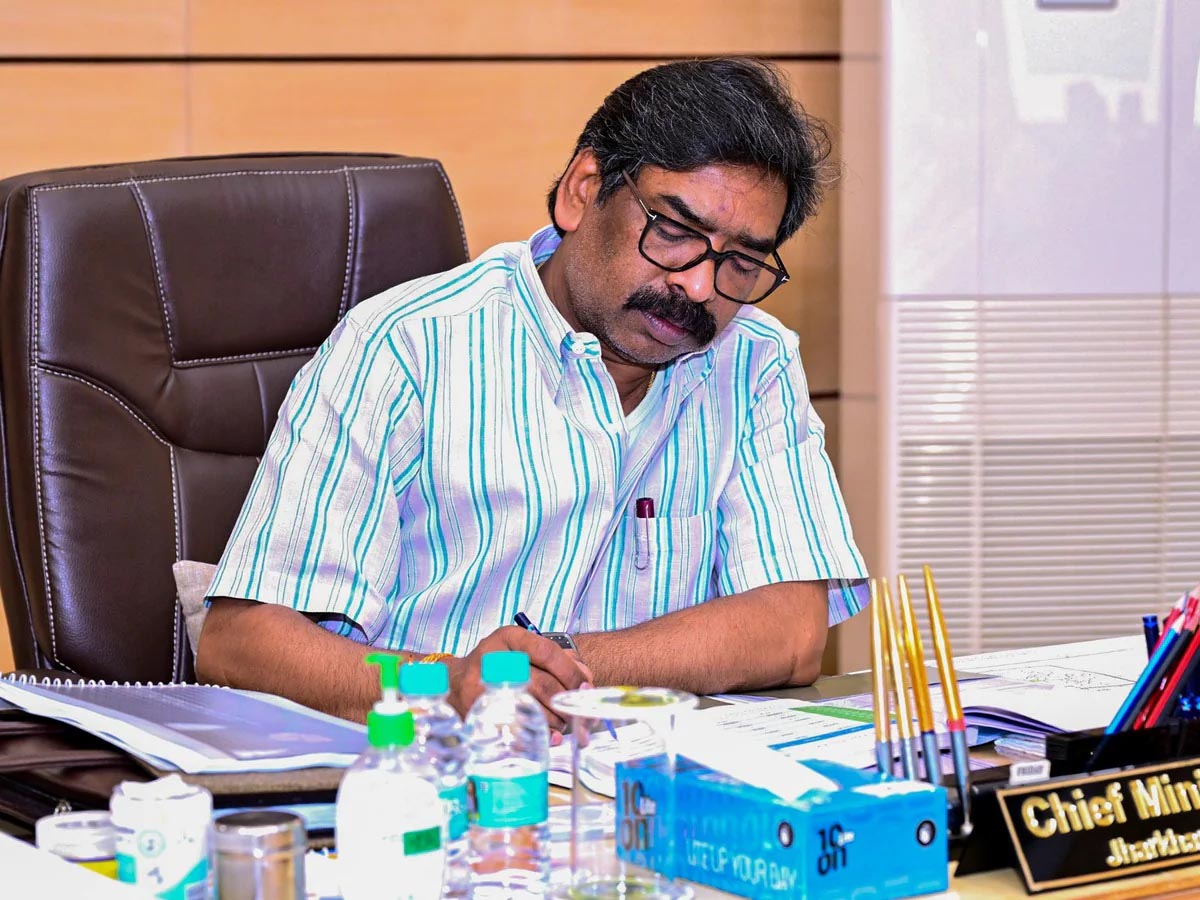
Ranchi. The Jharkhand Mukti Morcha (JMM) has announced a massive agitation against the Mines and Minerals (Development and Regulation) Amendment Bill-2026 (MMDR). Terming the amendment bill a critical issue concerning Jharkhand’s interests, the party has decided to wage a prolonged battle against it. Strategies for the agitation were discussed in detail during an extended meeting of the JMM Central Committee held on Thursday at Soharai Bhawan in Harmu, Ranchi. The meeting was presided over by party president and Chief Minister Hemant Soren.
Party office-bearers and Central Committee members from various districts of the state voiced their objections regarding the MMDR Amendment Bill during the meeting. District committees also offered several suggestions for the agitation, including proposals ranging from a phased protest campaign to a state-wide blockade, should the need arise. After deliberating on these proposals, the party leadership signaled its intent to intensify both political and public movements against the central government.
JMM leaders assert that mineral wealth is directly linked to Jharkhand’s economy and the rights of its people. The state has long raised issues concerning the exploitation of mineral resources and the revenue derived from them. Consequently, any differences between the state government and the Centre regarding laws governing the mining sector become matters of significant importance. The party alleges that the proposed amendment could adversely affect Jharkhand’s interests.
During the meeting, district committees emphasized that the agitation should not be confined to the capital alone; strategies to mobilize the party organization at the village and panchayat levels were also discussed. The plan is to roll out the proposed programs in phases to garner widespread public support against the amendment bill. JMM leaders urged party workers to take this issue to the general public and inform them about the potential impact of the central government’s decision.
The proposal for a blockade, should the need arise, is being viewed as particularly significant. However, the final decision regarding the timing and nature of such a blockade rests with the party leadership. Party leaders state that the agitation will be carried forward in a phased manner, with future courses of action determined by evolving circumstances. This signals that the JMM is preparing to sustain this issue as part of a long-term political movement.
Furthermore, the JMM has proposed a march to Delhi to exert pressure on the Central Government. Discussions were held regarding a plan to meet the President and the Prime Minister to present the party’s stance on the MMDR Amendment Bill. A delegation comprising party leaders and elected representatives may travel to Delhi for this purpose; however, the party will soon decide on the composition of the delegation and the dates for the meetings.
The meeting, chaired by Chief Minister Hemant Soren, is considered significant as it aimed to formulate a comprehensive strategy for the agitation at an organizational level. Deliberations focused on coordinating proposals received from district committees at the central level and determining the next steps. The JMM leadership is now preparing to finalize the schedule of protest activities.
Party leaders emphasized the pivotal role mineral resources play in Jharkhand’s identity and economy. Thanks to reserves of coal, iron ore, bauxite, and other minerals, the state ranks among the country’s leading mineral producers. Consequently, policy changes regarding mineral resources could impact state revenue, employment, and local interests. It is on these grounds that the JMM is opposing the Centre’s proposed amendment.
It was also clarified during the meeting that the agitation would be framed not merely as political opposition, but as a fight for Jharkhand’s rights and interests. Party workers may be tasked with remaining organizationally prepared and ensuring the success of the planned activities in accordance with directives from the central leadership.
This decision by the JMM is likely to escalate the political standoff between the Central Government and the Jharkhand government regarding mineral policy in the coming days. While the Centre is moving to reform the mining sector through amendments to the MMDR Act, the JMM is gearing up to oppose the move by linking it to the state’s rights and resources.
All eyes are now on the JMM’s next move. The party may soon announce the dates and format of a phased agitation. If talks with the Central Government fail to yield a solution, the option of expanding the protest and resorting to drastic measures—such as blockades—remains open. Meanwhile, the proposal to march to Delhi to meet the President and the Prime Minister signals the JMM’s strategy to elevate this issue to the national level. Jharkhand’s politics is likely to heat up further over this issue in the coming days.