









Omar said—criticizing the government is not sedition.

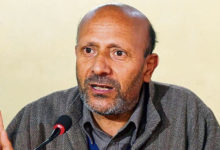
Srinagar. Jammu and Kashmir Chief Minister Omar Abdullah on Friday welcomed the statement by Rashtriya Swayamsevak Sangh (RSS) chief Mohan Bhagwat, in which he acknowledged that the grievances of ‘Generation Z’ (Gen Z) are valid and that protesting over an issue does not make them anti-national. Omar emphasized the importance of understanding the distinction between criticizing the government and engaging in anti-national activities.
Speaking to reporters, the Chief Minister noted that the students protesting in New Delhi over alleged irregularities in the NEET examination were criticizing government decisions and the system, not campaigning against the country. He stated that in a democracy, questioning government decisions and protesting to press for demands is a right of the citizens.
Omar Abdullah remarked that while the protesting students criticized the government, they did not speak against the nation. He described it as a positive development that Mohan Bhagwat had clarified the difference between opposing the government and acting against the country.
Do not equate government criticism with anti-nationalism
Omar stated that in a democratic setup, the government and the country are not synonymous. Governments come and go, but the nation and its institutions remain permanent. Therefore, it is inappropriate to view raising one’s voice against a government’s policies or decisions as an act against the country.
According to the Chief Minister, if the youth harbor dissatisfaction regarding any system, their concerns should be heard. Governments should respond with sensitivity, particularly to issues concerning students, as decisions related to education and competitive examinations directly impact the futures of millions of young people.
Omar added that if students suspect irregularities or flaws in an examination, they have the right to raise questions and demand answers. It is the government’s responsibility to investigate their grievances and rectify any shortcomings that come to light.
Reference to the NEET controversy
In his statement, the Chief Minister also referred to the student protests in New Delhi regarding alleged irregularities in the NEET exam. He reiterated that the protesting students had no intention of harming the country. He was seeking answers from the government regarding the examination process and the alleged controversies surrounding it.
NEET is one of the country’s major medical entrance examinations, with lakhs of students participating in it. Questions raised about the examination process are directly linked to the students’ future; therefore, it is crucial to take students’ concerns regarding any alleged irregularities seriously.
According to Omar, if every protest is viewed as an anti-national activity instead of listening to students’ grievances and answering their questions, it will weaken democratic dialogue.
Termed Mohan Bhagwat’s statement significant
Referring to RSS chief Mohan Bhagwat’s statement, Omar remarked that it was a positive development that he distinguished between opposing the government and acting against the country. In his view, there must be room for dissent in a democracy.
Omar stated that a person criticizing the government is not necessarily opposing the country. Often, citizens demand better policies and accountability from the government. The objective of a protest can also be to bring about improvements in the system.
The Chief Minister said that criticizing government decisions is part of the democratic process. When citizens raise their issues, governments should listen to them and seek appropriate solutions.
Discussion on Gen Z’s grievances
Political and social discourse on this issue has intensified after Mohan Bhagwat’s statement acknowledged the validity of Gen Z’s grievances. ‘Gen Z’ generally refers to the younger generation that has grown up in the era of digital technology and social media.
The younger generation is increasingly raising its voice on issues such as education, employment, competitive examinations, transparency, and administrative accountability. Social media and digital platforms have provided young people with a major medium to publicly express their opinions.
Omar Abdullah indicated that instead of viewing the youth’s grievances merely as protests, the underlying issues should be understood. If young people have complaints regarding an examination, employment, or the government system, there should be a process for dialogue and resolution.
Dissent is part of democracy
The Chief Minister’s statement also emphasized the importance of democratic dissent. In a democratic country like India, citizens have the right to express their views, stage peaceful protests, and question the government.
Omar stated that there is a clear distinction between criticizing the government and acting against the country. Raising one’s voice against the government does not imply that an individual is anti-national. He noted that Mohan Bhagwat’s statement served to clarify this very distinction.
Political Significance
Omar Abdullah’s statement is also considered politically significant. Opposition parties have long questioned the tendency to label criticism of the government as anti-national. By welcoming the RSS chief’s statement, Omar has prominently highlighted the distinction between the government and the nation.
He also indicated that in a democracy, governments must possess the capacity to listen to criticism. It is the responsibility of the administration to address the questions raised by the public, particularly the youth.
Amidst the ongoing debate regarding the grievances of Gen Z, student protests, and criticism of the government, Omar Abdullah’s statement…