









Rice prices are rising in parts of Rayalaseema due to water shortage in the TB dam.
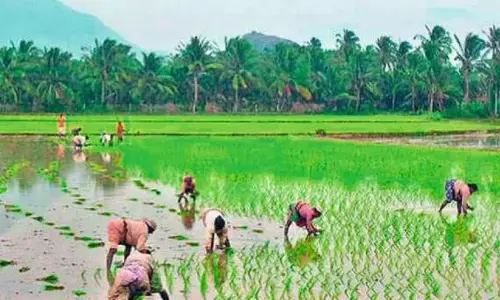
Anantapur: Rice prices have been rising in Rayalaseema and parts of Karnataka for the past year and a half, following the failure of one of the Tungabhadra Dam’s crest gates.
Rice production in these areas depends on water supply from the Tungabhadra Project through the High Level Main Canal (HLMC) and Low Level Canal (LLC).
Siriguppa taluka in Bellary district in neighboring Karnataka is known as the rice bowl of that state due to its fertile land and water availability through LLC. Rice from here is exported annually not only to southern states but also to northern India. The Kanekal variety in Anantapur and Sona Masuri in Kurnool are also famous, and they also depend on Tungabhadra water.
However, after the Tungabhadra Project’s 19th crest gate was breached, water storage in the dam has been limited to just 68 TMC feet for the past two years, even during peak rainy seasons. Because of this, the dam is unable to store its full capacity of 105 tmc feet of water.
Due to low water levels in both major Tungabhadra canals, paddy cultivation in many areas is limited to the first crop only. Farmers are advised to grow a second crop. Consequently, rice prices have risen in the wholesale market, impacting the retail market as well.
Rice brands like Sona Masuri and HMT are selling for between ₹4,300 and ₹4,800 in the local wholesale market. One-year-old rice is priced between ₹5,500 and ₹6,500, depending on the brand.
Manjunath, a trader from Siriguppa, said, “This increase of ₹300 to ₹800 per quintal has been observed due to poor production in Rayalaseema and many parts of Karnataka.”
Significantly, the Tungabhadra Water Board has begun work on replacing all 33 crest gates of the TB Dam. The target is to complete the replacement by May this year. Therefore, it is said that rice production is expected to increase next season.