










Snow leopards are crossing the international border in search of mates and preferred prey.
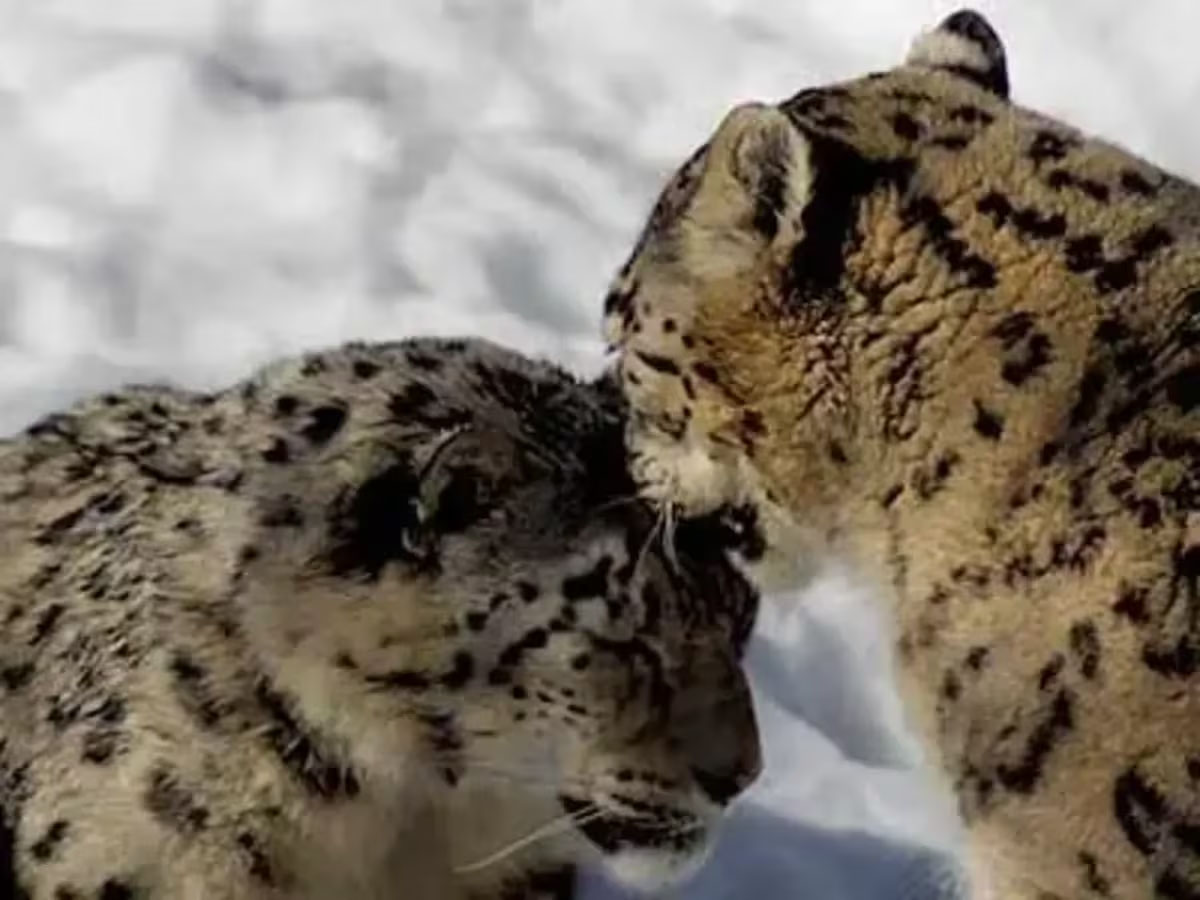
Dehradun. Significant and surprising information has emerged regarding the rare snow leopards found in the Himalayan regions. A scientific study has revealed that snow leopards do not restrict themselves to a specific territory; instead, they cross international borders in search of mates and preferred prey. By monitoring their movements using GPS-satellite collars, researchers have gathered crucial insights into their travel patterns and behavior.
The study also revealed that some snow leopards travel up to three times the distance of their usual range in search of food. This indicates that food availability and the search for breeding mates are key factors influencing their movements. Their cross-border movement is considered significant for wildlife conservation efforts.
Monitoring via Satellite Collars
To understand the movements of snow leopards, researchers fitted them with GPS-satellite collars. These collars enabled the recording of their locations and movements over an extended period. Compared to the territories they typically roam, some leopards covered vast distances in search of food and mates.
Analysis of the GPS data revealed that snow leopard movements are not always confined to a single country’s borders. In pursuit of food and breeding resources, they often venture into the territory of other nations. Such movement helps in understanding the actual needs of wildlife beyond the boundaries of the Himalayan ecosystem.
Long Journeys in Search of Preferred Prey
Snow leopards are predators that primarily inhabit rugged, mountainous terrain. Food availability within their natural habitat is not always consistent; consequently, when preferred prey becomes scarce in a particular area, snow leopards may migrate to other regions in search of food.
The study found that some snow leopards traveled up to three times the distance they normally cover. This behavior is being directly linked to food availability. Snow leopards are more likely to venture into areas where prey is relatively abundant.
This information is crucial for researchers, as it helps in better understanding the snow leopards’ actual habitat ranges and their dietary needs.
The Search for a Mate Also Expands Their Range
The search for a mate is another reason snow leopards undertake long journeys. During the breeding season, males and females may need to travel beyond their usual territories to find a suitable partner; international borders pose no barrier to them in this regard.
Location data from GPS collars has clarified that snow leopards can travel long distances as part of their natural behavior. They roam across borders in mountainous terrain and shift their territories based on resource availability.
Important Implications for Conservation Policy
The transboundary movement of snow leopards is highly significant for conservation. If a snow leopard’s habitat spans the border of two countries, conservation efforts by a single nation alone would be insufficient. Effective wildlife conservation may require better coordination and shared strategies among the concerned countries.
The study also suggests that protected areas for snow leopards should not be defined solely by administrative boundaries. Conservation plans would be more effective if they took into account the animals’ actual habitats, prey availability, and movement corridors.
Monitoring Climate Change and Prey Availability
Climate change in the Himalayas can impact wildlife habitats and the availability of prey. If shifts in temperature and weather alter the distribution of prey species, snow leopards may have to travel greater distances in search of food.
In this context, monitoring via GPS-satellite collars can provide vital data for future conservation efforts. It enables scientists to understand which areas snow leopards frequent, when their activity levels peak, and the directions they take when searching for food or mates. The World of Wildlife Beyond Borders
The fact that snow leopards cross international borders demonstrates that the political boundaries created by humans do not constitute natural boundaries for wildlife. For them, what matters is the availability of food, water, safe habitat, and breeding partners. When these resources become scarce in a particular area, they move towards other regions.
The findings of this study are considered crucial for understanding the behavior and conservation needs of snow leopards. Data obtained via GPS-satellite collars has provided scientists with a first-of-its-kind opportunity to understand, on a large scale, the distances these rare predators roam within their natural habitats.
The study’s conclusions point to the need for new strategies regarding snow leopard conservation. Collaborative conservation efforts will be essential for these snow leopards that cross international borders in search of food and mates. Furthermore, safeguarding their natural habitats, prey species, and movement corridors must be prioritized in conservation initiatives.