









FIFA World Cup 2026: 3 countries, 48 teams, and new strict rules
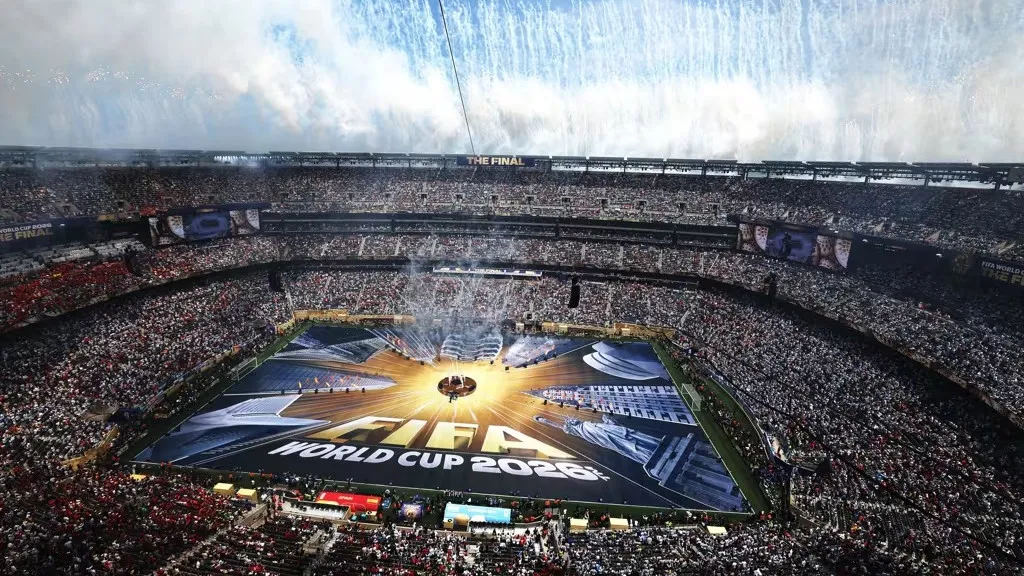
New York: This World Cup felt different from the very beginning. FIFA had already decided on the expanded 48-team format before selecting the hosts, and when the joint bid from Canada, Mexico, and the United States won in 2018, the 2026 tournament became the first World Cup to be held across three nations.
Football’s governing body later confirmed three additional changes: automatic red cards for players covering their mouths, mandatory hydration breaks in every match, and awarding a corner kick to the attacking team if a goalkeeper held onto the ball for too long.
Diverse Styles
This major tournament showcased a variety of footballing philosophies and cultures. On one hand, there were teams that prioritized positional play and maintaining possession; on the other, there were aggressive, high-pressing teams that took risks, relying on speed and spectacular play.
Europe, too, was clearly divided between two distinct styles of play. France relied heavily on attacking players like Kylian Mbappé, Ousmane Dembélé, and Michael Olise.
In contrast, Spain built their game plan around patience and stifling the opposition. Their defense broke the World Cup record for consecutive clean sheets—maintaining them for six straight matches, a streak that began at the 2022 World Cup. According to Xinhua, goalkeeper Unai Simón’s shutout streak reached 609 minutes following the Round of 16 victory over Portugal.
Morocco carried Africa’s hopes forward with a unique model that blended positional awareness with speed and courage; they excelled at quickly halting opponents, a departure from the deep defensive block they had employed while reaching the semi-finals in 2022. Meanwhile, South American teams also displayed impressive form, even though several former champions from the region—such as Brazil and Uruguay—failed to live up to expectations.
Rise of New Stars, Farewell to Legends
The tournament proved to be an excellent platform for emerging players to showcase their talent. A prime example is Morocco’s Ayoub Bouaddi. The 18-year-old, who plays for the French Ligue 1 club Lille, had previously represented France at the youth level and only became eligible to play for the ‘Atlas Lions’ after FIFA approved his switch of national allegiance in May.
He displayed maturity well beyond his years and attracted the attention of clubs like Manchester City and Arsenal with his gameplay. Côte d’Ivoire’s 19-year-old Yann Diomandé arrived at the tournament with high expectations and proved his mettle. His African team reached the knockout rounds but was defeated by a last-minute goal from Norway’s Erling Haaland.
Colombia’s Gustavo Puerta was another player who quietly impressed. The creativity and excellent passing range of this Racing Santander midfielder proved invaluable. Colombia reached the Round of 16 but lost to Switzerland in a penalty shootout.
Alongside the arrival of these new talents, some major stars bid farewell. Modern-day greats like Cristiano Ronaldo, Luka Modrić, and Neymar said goodbye to football’s biggest stage.
Controversies On and Off the Pitch
One of FIFA’s new rules grabbed headlines during the group stage. Paraguay’s Miguel Almirón was sent off (shown a red card) under a rule prohibiting players from covering their mouths during on-field arguments; he was the first player to be penalized in this manner. The Atlanta United winger was suspended for one match following an incident involving Turkish defender Mert Müldür. FIFA stated that the decision was final and could not be appealed, ruling him out of Paraguay’s final group match against Australia.
Another bizarre incident involved Folarin Balogun. The US forward was sent off during his team’s Round of 32 victory over Bosnia-Herzegovina for stomping on an opponent’s ankle. This incident resulted in an automatic one-match suspension.
A few days later, FIFA’s Disciplinary Committee temporarily lifted the ban, fined Balogun $40,000, and cleared him to play against Belgium.
The Belgian federation contested the decision, but FIFA’s Appeal Committee rejected the challenge less than eight hours before kickoff. UEFA described the move as “crossing a red line,” calling it “unprecedented, incomprehensible, and inappropriate.” Balogun himself later admitted he knew that overturning the decision would spark “significant controversy.”
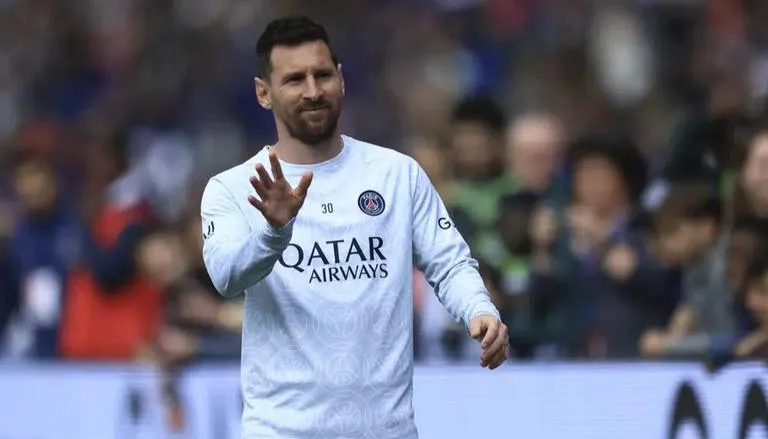
The tournament showcased a brilliant generation of attacking players. Mbappé scored 10 goals, while eight-time Ballon d’Or winner Lionel Messi netted eight in what was likely his final World Cup. Erling Haaland, Jude Bellingham, Harry Kane, and Mikel Oyarzabal were also in the race for the Golden Boot. These players redefined what fans could expect from a forward in a major tournament.
Spain achieved an even greater feat: they prevented Messi from adding another memorable chapter to his illustrious career and claimed the tournament’s most unforgettable story for themselves.