









Tamil Nadu: Pottery industry is in decline
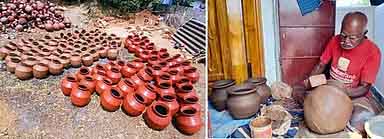
Tamil Nadu: Workers in the industry lamented that the pottery industry is declining, citing a lack of excavation permits and a lack of enthusiasm among young people.
Sangam literature and grammar books reveal that people in Tamil Nadu have used pottery since ancient times. Twenty-five years ago, every village or a few villages had pottery workshops, including clay pots, stone lamps, and stoves. Clay horses, bulls, idols of gods and goddesses, feet, and hands were also made there for offerings at temples.
The development of modern science, migration of people from villages to cities, and the advent of pottery have all led to a decline in the use of pottery.
Furthermore, the pottery industry is declining due to factors such as a lack of proper clay mining permits, high costs, and a shortage of workers. The central and state governments should announce new subsidy schemes to make this industry accessible to today’s younger generation. All the necessary facilities for pottery production must be provided without any conditions. Only then can the declining pottery industry be revived and passed on to the next generation. Workers in the industry expressed their anguish that if this is not done, school and college syllabi will consist solely of paper notes on pottery.
The current climate change has brought human society back to nature. Because of this, people are turning to nature not only for traditional items but also for essential needs like vegetables, food, and clothing. This is a good thing.
The pottery industry suffered a setback after the introduction of Eversilver utensils. However, awareness has led to a desire to use pottery. Now that the summer season has begun, pottery production is back in full swing. Similarly, Pongal pots are made during the Pongal festival, and fire pots and Iyarkkan pots are made during temple festivals. At other times, merchants book and purchase items like gravy pots. The hull-less clay found among the Kanmai people in the areas of Valiyapatti, Alanganallur, Kondayampatti, Sundararajanpatti, Alagapuri, and Kitharipatti enhances the quality of the pottery. Pottery made in this way is eagerly purchased by merchants and the public. Depending on the size and shape of the pot, it sells for ₹50 to ₹250.
Pottery made in Sundararajanpatti is exported to Coimbatore, Tiruppur, Udumalaipettai, Pollachi, and other parts of Tamil Nadu. There is a great demand for naturally made pottery. However, there is a problem in obtaining the clay required for making the pots. Revenue department officials don’t allow clay mining even in permitted areas.
The price of firewood and straw needed for the kiln is rising day by day. Although pottery is not profitable, we continue to work like our ancestors. However, our children don’t show much interest in this industry.