









Tamil Nadu: Prime Minister’s insurance will not be available in private hospitals
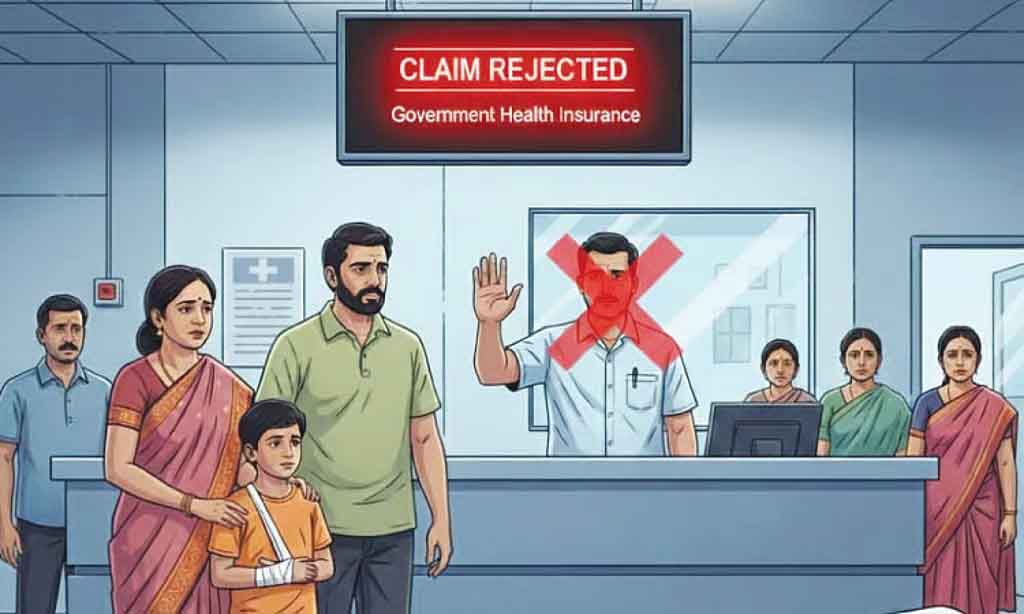
Tamil Nadu: It appears that the insurance company has instructed private hospitals not to provide treatment under the Chief Minister Insurance Scheme for the next few weeks.
As a result, it has been reported that the scheme has been suspended in most private hospitals.
The Chief Minister Insurance Scheme is administered in Tamil Nadu by the United India Insurance Company. The government provides approximately ₹1,300 crore in insurance coverage to the company each year.
Private hospitals are more likely to be covered under the Chief Minister Insurance Scheme than government hospitals. However, the strange thing is that not all treatments are available there. Instead, only some treatments are available free of charge. Exceptionally, some private hospitals provide most treatments under the Chief Minister Insurance Scheme. However, even there, the service has been discontinued for the past month and a half. Private hospital administrators and health department officials explained the reason:
United India Insurance has entered into agreements with third-party insurance management companies (TMBs) such as Medi Assist, Vidal, MTI, and HI TMBs to implement the Chief Minister’s Insurance Scheme in Tamil Nadu. These companies are assigned insurance services based on districts.
Typically, the government pays insurance premiums to United India on January 10th each year. Consequently, large sums of money are released for treatment at private hospitals from January to October without any problems.
Meanwhile, in the next two months, insurance companies appear to be releasing payments based on their financial situation.
Private hospitals have been instructed by insurance companies not to admit patients under the Chief Minister’s Insurance Scheme in November and December this year. If treatment is performed in violation of this policy, the amount will not be refunded.
Low Amounts: Furthermore, there are some other issues with the Chief Minister’s Insurance Scheme. This means that there is a limit on the maximum amount that must be paid for each treatment. This amount is very low.
For example, if a person with a fracture needs to have a metal device (implant) implanted in their body, insurance coverage is only available for devices manufactured in India.
Even if a patient wishes to have foreign equipment installed, they cannot pay more. If they do so, action will be taken against the private hospital concerned.
Similarly, the amount for heart surgery has already been reduced. Consequently, the number of heart surgeries performed under Chief Minister Insurance has been decreasing over the past few years.
Due to a lack of sufficient funds, it is not possible to use the most modern medical technology. Therefore, he said that the government should take steps to increase the insurance amount based on the situation and provide Chief Minister Insurance without interruption throughout the year.
Deficiency Meeting: Regarding this, Dr. Vineeth, Director of the Tamil Nadu Health Services Project, said:
The Tamil Nadu government pays insurance premiums to insurance companies without any dues. They also release funds to private hospitals for treatment within seven days. He added that if any complaints arise regarding this matter, we hold a complaint meeting every Monday to resolve them.
You can report on 104: Minister M. Subramaniam
Public Health Minister M. Subramaniam said that hospitals that refuse to treat patients under the Chief Minister’s Insurance can be reported on 104.
He said that the government spends ₹1,500 crore annually on the insurance scheme and any deficiencies can be immediately reported to the government.