










Traffic signals: A century-old innovation that’s still shaping cities, watch
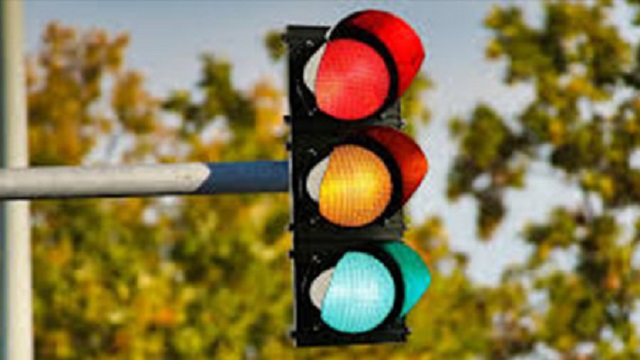
To travel from one place to another on the road, you have to pass through many traffic signals. From time to time, the changing colors of traffic signals – red, green and yellow – are used to enforce traffic rules.
You must have known how important these traffic lights are for traffic management, but have you ever wondered who invented them? Let’s know some interesting facts about them.
The first traffic signal was installed in Westminster, London in December 1868. Located near the British Parliament and Westminster Bridge, these signals were operated not by electricity but by gas. Since they had to be operated manually, a policeman would fill the signal with gas through a pipe and then operate it. It is worth mentioning that this signal once leaked and caused an explosion, resulting in the death of a police officer on the spot.
This traffic signal initially used two colors, red and green, which were connected by a pipe. These signals were developed by British Railways traffic engineer John Pick Knight. Surprisingly, they were not invented for roads but for railways.
Talking about modern traffic lights, they were introduced by the Americans. They were first installed in Cleveland in 1914. These traffic lights were powered by electricity, but it took a long time to develop them. Initially, they had to be turned on and off with the help of a switch, but over time it was developed. It was invented by a police officer named William from Michigan.
Initially, traffic lights used only two colors, red and green. But in 1921, William added yellow. Later, three-color signal lights were used, which are still used in traffic signals.
When did traffic signals start in India?
The first traffic signal in India was installed in Chennai. The first traffic signal was installed at Egmore Junction in 1953. A few years later, it was also installed in Bengaluru and gradually this traffic signal was expanded to other cities.