









Tirupati: Tributes paid to tribal hero Alluri
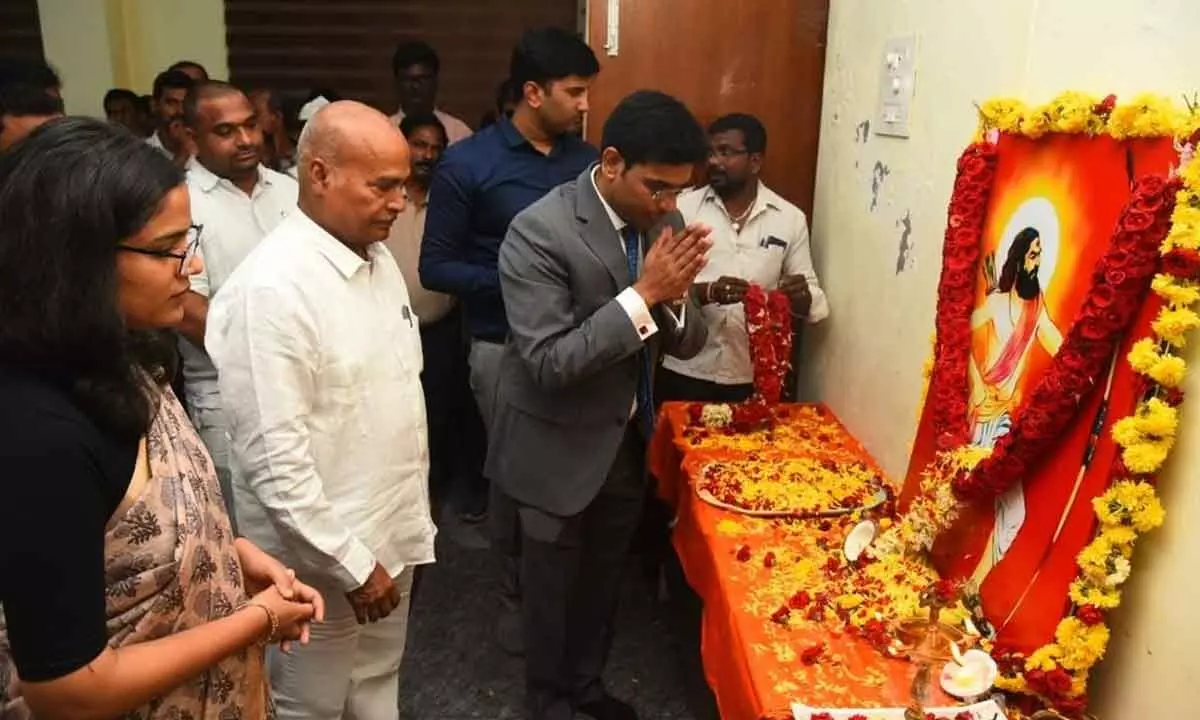
Tirupati: The 127th birth anniversary of revolutionary freedom fighter Alluri Sitarama Raju was observed on Thursday. Political leaders, government officials and social organisations paid homage to the leader. District Collector Dr. S. Venkateswar along with Joint Collector Dhyanchandra, city MLA Arani Srinivasulu and other officials paid homage to the portrait of Alluri. He suggested the youth to reform themselves and strive for the development of the society by staying away from vices. Municipal Commissioner Aditi Singh along with municipal officials; SP Harshavardhan Raju; Red Sanders Anti-Smuggling Task Force officials, SP Srinivas, DSP Chechu Babu, RI Suresh Kumar Reddy, CI Srinivas Suresh Kumar and others paid homage to the portrait of Alluri Sitarama Raju in their respective offices. They praised the great leader’s sacrifices to free the country from British rule and called upon the youth to follow the footsteps of Alluri and inculcate the spirit of patriotism. BJP cultural wing convener Gundala Gopal Reddy along with the leaders paid floral tributes to Alluri Sitarama Raju and remembered his services to the country.