










Three new Berberis species discovered in Arunachal
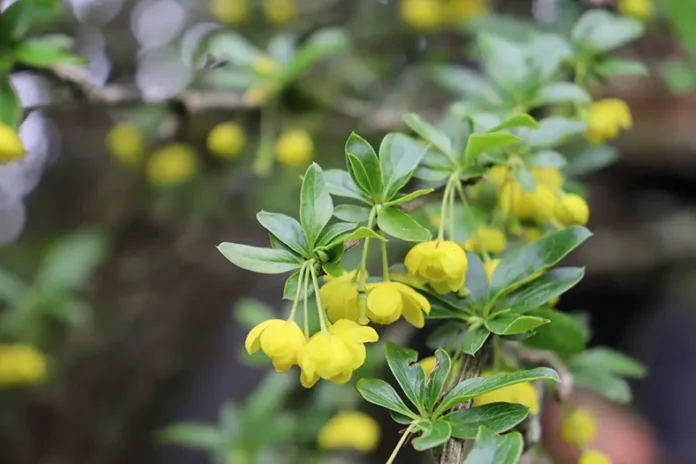
ITANAGAR: Three new deciduous species of Berberis (Berberidaceae) have been discovered from Tawang and West Kameng districts.
The newly discovered plant species, described as new to science, are Berberis pseudovirescens, Berberis orbicularis, and Berberis tawangensis, Dr Pankaj Bharali, scientist at Assam’s Jorhat-based North East Institute of Science and Technology (NEIST), said in a release.
The study, published in the Nordic Journal of Botany(2026) by Bipankar Hajong and Pankaj Bharali from the NEIST, highlights the still underexplored diversity of the Eastern Himalaya.
According to Dr Bharali, the discoveries form part of an ongoing taxonomic investigation of Berberis in Arunachal Pradesh, a region increasingly recognised as an important hotspot for species diversification within the genus.
The newly described species are distinguished from their closely related taxa by a combination of vegetative and floral characters, including differences in leaf morphology, inflorescence structure, sepal and petal characteristics, gland shape, ovule number, and berry morphology, including the genomic insight of the three newly described Berberis, the release said.
“While B pseudovirescens is allied to B virescens, B orbicularis shows affinity with B cooperi, and B tawangensis resembles B thomsoniana, each possessing stable diagnostic and genomic characters supporting their recognition as distinct species,” the release said.
The study also expands the known distributional understanding of the Himalayan Berberis, with B orbicularis additionally reported from Bhutan and southern Tibet, based on herbarium and photographic evidence.
All three species are presently assessed as ‘data deficient’, following IUCN guidelines, due to limited information on their population size and distribution. The discovery emphasises the urgent need for continued botanical exploration and conservation efforts in the fragile subalpine ecosystems of the Eastern Himalaya, which can be recognised as the Berberis hotspot of Indian Eastern Himalaya, the release added.