










Four European countries support India’s bid for permanent membership in UNSC
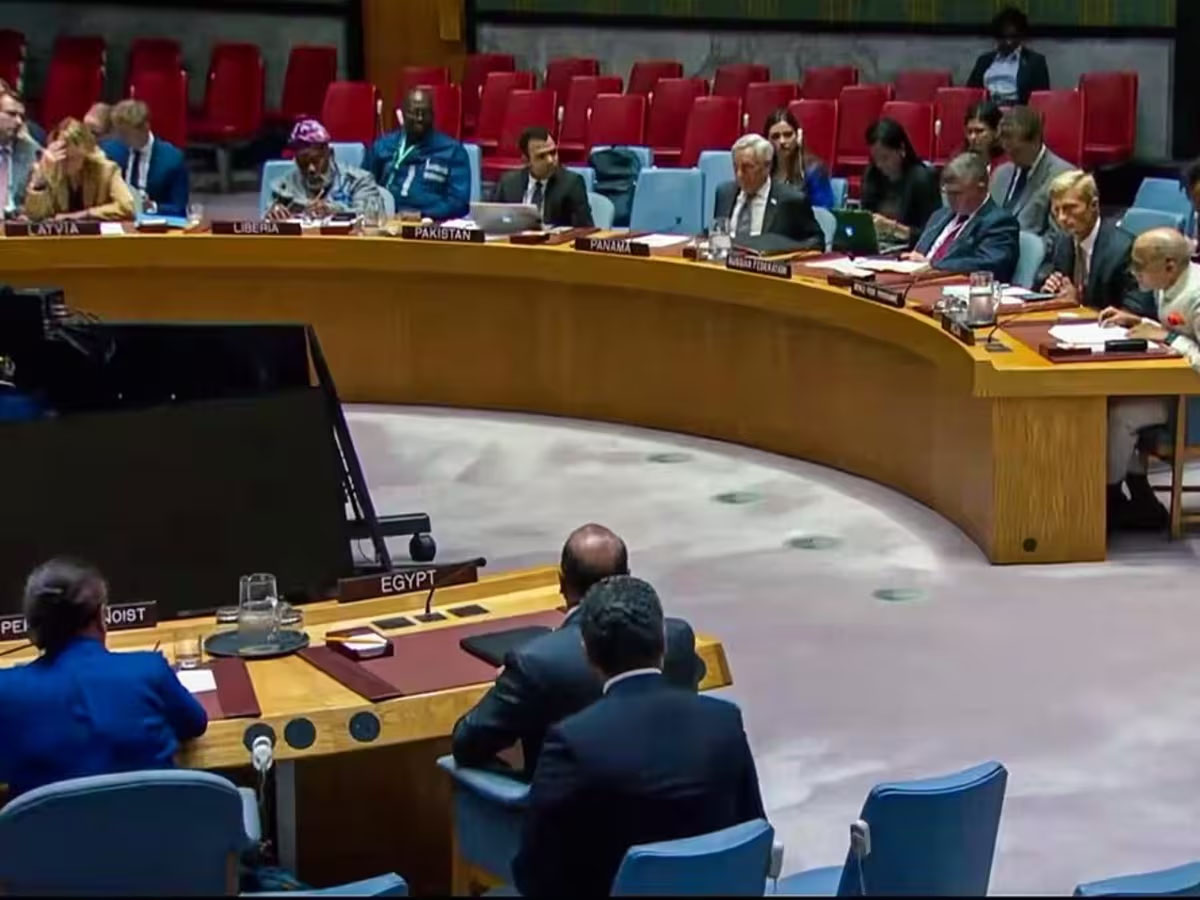
New Delhi/New York: India’s long-standing demand for permanent membership of the United Nations Security Council (UNSC) has received new diplomatic support. Four countries of Central Europe, Hungary, Poland, Slovakia and Czech Republic, have collectively supported making India a permanent member of the Security Council. These four countries are members of the Visegrad Group i.e. V4. The support came at the first V4-India Foreign Ministers’ Meeting held during the 81st session of the United Nations General Assembly in New York.
On behalf of India, Foreign Minister S. Jaishankar joined. Slovakia’s Foreign Minister Juraj Blanar said after the meeting that the V4 countries agreed that India, as an important country of the Global South and an emerging power in the Indo-Pacific region, should get a place as a permanent member of the United Nations Security Council. Jaishankar described this meeting as a historic occasion.
The V4 includes Hungary, Poland, Slovakia and the Czech Republic. With the support of these countries, India’s demand for reform of the UN Security Council has got the support of another regional group. The meeting discussed not only UNSC reforms but also trade, technology, innovation, defence, space, connectivity and enhancing people-to-people contacts between India and the V4 countries. The Foreign Ministers agreed to meet regularly and move forward towards an annual Business Forum.
India has long been demanding reforms in the existing structure of the UN Security Council. India argues that the current system reflects post-World War II conditions and does not adequately represent today’s global political, economic and demographic realities. India told the United Nations in April 2026 that the more than 80-year-old structure does not meet the needs of current geopolitical realities.
There are a total of 15 members in the United Nations Security Council. Of these, five permanent members are America, Russia, China, France and Britain, while the remaining 10 members are elected by the United Nations General Assembly for a two-year term. Only five permanent members have veto power, through which they can stop any important resolution of the Security Council.
India has been a temporary member of the Security Council eight times so far. Her most recent term was in 2021–22. India considers its huge population, growing economy, contribution to UN peacekeeping operations and increasing role in international diplomacy as important grounds for its claim for permanent membership.
India is not alone in demanding expansion of the Security Council. It is part of the G4 group along with Brazil, Germany and Japan. The four countries support each other’s claim for permanent membership and have been demanding the expansion of the Security Council. The G4 has advocated for increased representation in both the permanent and non-permanent categories in the Security Council.
India’s claim for permanent membership has also received support from America, Russia, France and Britain on various occasions. However, China has not clearly supported India’s permanent membership among the five permanent members of the Security Council. Along with this, there is no consensus among the member countries of the United Nations on issues like expansion of the Council, number of new permanent members and giving them veto rights.
Veto power is also a big question related to the reform of the Security Council. India’s stance has been that if new permanent members are added to the Security Council, their rights should not be different from those of the existing permanent members. India said at the United Nations in April 2026 that such a separate category of permanent members should not be created in which some members have a veto and new permanent members should not have this right.
However, getting the support of four European countries does not mean that India will immediately get permanent membership or veto rights. Changes to the Security Council would require an amendment to the UN Charter. For this, along with broad international consensus, the role of the existing five permanent members is also decisive. Different countries and groups have their own proposals regarding the expansion of the Security Council, so the reform process has remained at the negotiation level for a long time.
The support of V4 countries is important in the sense that India’s demand has got the support of four Central European countries simultaneously. With this, India and V4 countries have also taken steps towards furthering their relations institutionally. Jaishankar said India’s relations with the EU are deepening and special initiatives will also be taken with the V4 countries.
India has also launched its campaign for the non-permanent membership of the United Nations Security Council for 2028-29 in July 2026. On the other hand, its long-term priority remains comprehensive reforms and permanent membership of the Security Council. The demand has now received new diplomatic impetus with the collective support of Hungary, Poland, Slovakia and the Czech Republic, but final change will depend on broader agreement among UN member states and a process of charter amendment.