










Close monitoring of renewable energy projects near the LoC, LAC, and international border.
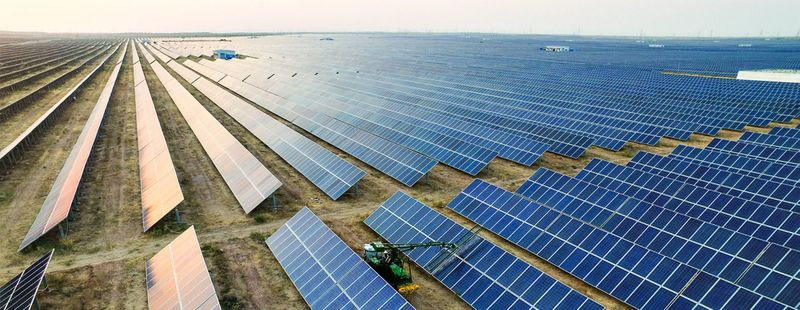
New Delhi. The Central Government has decided to tighten the approval process for proposed renewable energy projects in sensitive areas along the country’s borders, prioritizing security arrangements. Provisions regarding security clearance have been established for renewable energy projects—including solar, wind, and hybrid energy projects—proposed near the Line of Control (LoC), Line of Actual Control (LAC), and the International Border (IB).
Under the new system, security clearance from the Ministry of Home Affairs (MHA) will be mandatory for renewable energy projects proposed within a 50-kilometer radius of the LoC, LAC, and the International Border. Additionally, a separate ‘No Objection Certificate’ (NOC) from the Ministry of Defence will be required for projects proposed within a 20-kilometer radius of the border.
This move by the government is considered significant at a time when there is a strong emphasis on rapidly expanding renewable energy capacity—including solar and wind power—across the country. While establishing large-scale energy projects in border areas can boost power generation capacity, it is equally important to address security concerns given the strategic sensitivity of these regions.
MHA Approval for Projects within a 50-Kilometer Radius
According to the proposed rules, security clearance from the Ministry of Home Affairs will be mandatory for any solar, wind, or hybrid renewable energy project to be set up in sensitive areas falling within a 50-kilometer radius of the LoC, LAC, and IB.
The objective is to ensure that large energy projects established in border areas do not compromise national security interests. The security clearance process for these projects may take into account factors such as the geographical location, strategic importance, and prevailing security conditions of the respective area.
Large-scale energy projects in border areas involve the installation of solar panels, wind turbines, power transmission networks, substations, and other infrastructure. Consequently, a security-focused review of all critical aspects associated with these projects is deemed essential. Ministry of Defence NOC for Projects within 20 km
Security protocols have been tightened for projects proposed closer to the borders. A separate No Objection Certificate (NOC) from the Ministry of Defence will be mandatory for renewable energy projects proposed within a 20-kilometer radius of the Line of Control (LoC), Line of Actual Control (LAC), and International Border (IB).
This provision specifically applies to areas where military activities, defence installations, or zones of strategic importance may exist. Before establishing a project, it is essential to ensure that its construction or operation does not adversely affect military activities, surveillance systems, or security installations.
The Ministry of Defence’s NOC process will enable the assessment of such potential risks. This allows for the early identification of defence-related objections regarding the project’s location and the associated infrastructure.
Impact on Solar and Wind Projects
India is continuously working towards expanding its renewable energy capacity. Solar and wind energy projects require vast tracts of land. Many border areas in the country offer potential for such projects due to land availability and favorable natural conditions.
However, land use in border areas cannot be determined solely by economic or energy requirements. Aspects related to national security must also be considered when planning any major construction in these regions.
Solar projects involve the large-scale installation of panels and associated electrical infrastructure, while wind projects require tall towers and turbines. Hybrid projects may integrate solar and wind energy with other energy systems. The presence of such structures can raise concerns regarding security and surveillance in border areas; therefore, obtaining approval from the relevant ministries prior to project commencement is crucial.
Approval Process for Investors
The new security framework may also impact companies and investors setting up renewable energy projects in border areas. When planning a project, it will now be necessary to consider the distance of the proposed site from the LoC, LAC, or IB.
If a project falls within a 50-kilometer radius, security clearance from the Ministry of Home Affairs will be mandatory. Additionally, projects falling within a 20-kilometer radius will be required to obtain a No Objection Certificate (NOC) from the Ministry of Defence.
While this will add extra steps to the project approval process, the government’s priority is to advance renewable energy projects while upholding national security. Companies will need to factor in these security provisions right from the initial planning and site selection stages.
Balancing Energy Security and National Security
Both energy security and national security are crucial for India. On one hand, the country needs to rapidly expand its clean energy capacity; on the other, the sensitivity of border areas cannot be overlooked.
Renewable energy projects in border regions can contribute to local power availability, employment, and infrastructure development. However, the security of the construction, communication systems, power transmission networks, and technical equipment associated with these projects must also be ensured.