









Traffic jam in Hyderabad during CM Revanth Reddy’s oath ceremony
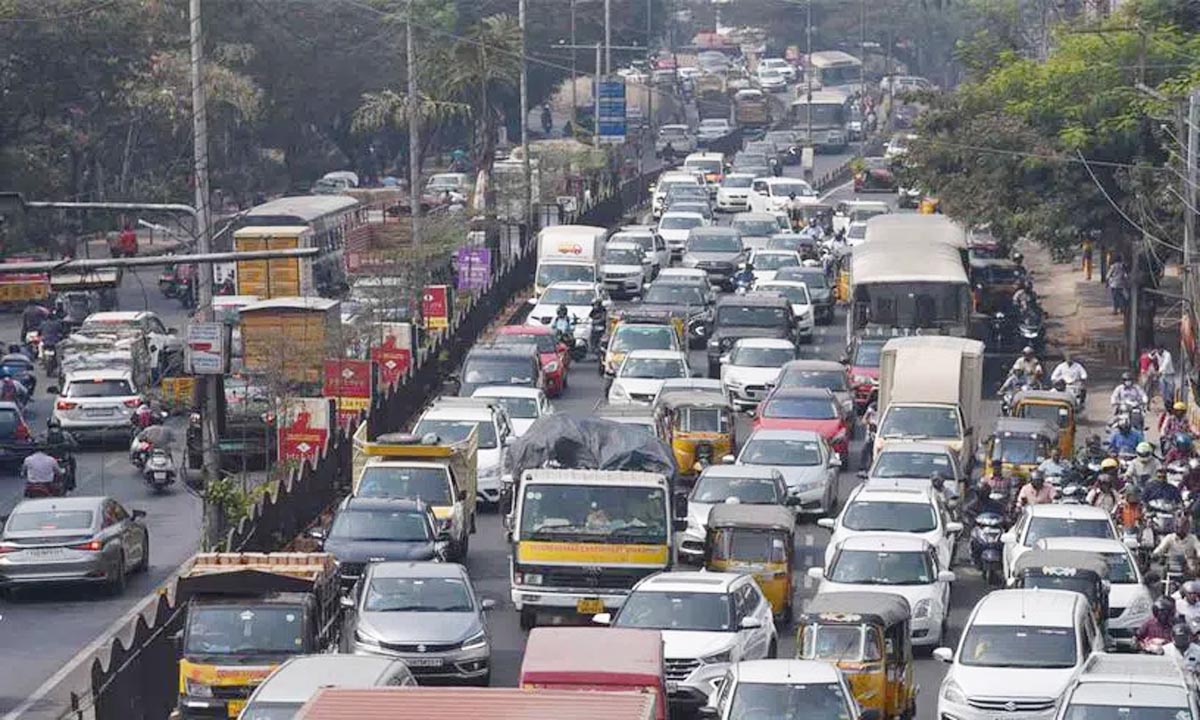
Hyderabad: Heavy traffic jams were seen in various areas of the city in view of the swearing-in ceremony of Minister Principal A Revanth Reddy at Stadium LB on Thursday. Traffic disruption was observed for long periods at Nampally, Ladikapul, Abid Road, Koti, Narayanguda, Himayatnagar, Banjara Hills, Masab Tank, Somajiguda and Khairatabad. The traffic police deployed to control the traffic expressed their impotence when miles of people arrived in four-wheelers from across the state to watch the swearing-in ceremony. He saw senior traffic police officers giving instructions to traffic police personnel on their VHF internal communication devices. However, the ground reality was completely different: people simply abandoned their vehicles and walked towards the entire prison site. After the event, the transit police allowed the VVIPs and VIPs to move to their destinations and the event attendees were detained for about half an hour. At many places we saw that ambulances were stuck in traffic jams and conductors were unable to do anything except sounding emergency sirens. In fact, buses diverted from TSRTC to other narrow alternative roads like Nampally Ek Minar Masjid-Bazar Guard, La Colonia Vijayanagara, Masab Tank towards Mehdipatnam or Banjara Hills. “It took me about an hour to reach Banjara Hills from Nampally. There is a lot of traffic on Nampally-Vijaynagar Colony Road and the main road is completely blocked at AC Guards”, asked Hrithik, an executive doctor. The traffic police, within the framework of the security checkpoint, entered the stadium L.B. Issued an alert to the public informing them about traffic slowing down and traffic jams around . However, traffic congestion increased to Mehdipatnam, Punjagutta, Masab Tank, Nampally, El Cruce D Abid Road, Ram Kothi, King Kothi etc. “Despite the arrangements, this happened due to the movement of VVIPs and other important dignitaries on the routes leading to the LB Stadium,” a transit police officer said.