










Illegal felling of Sarai trees in Marwahi, forest wealth at risk
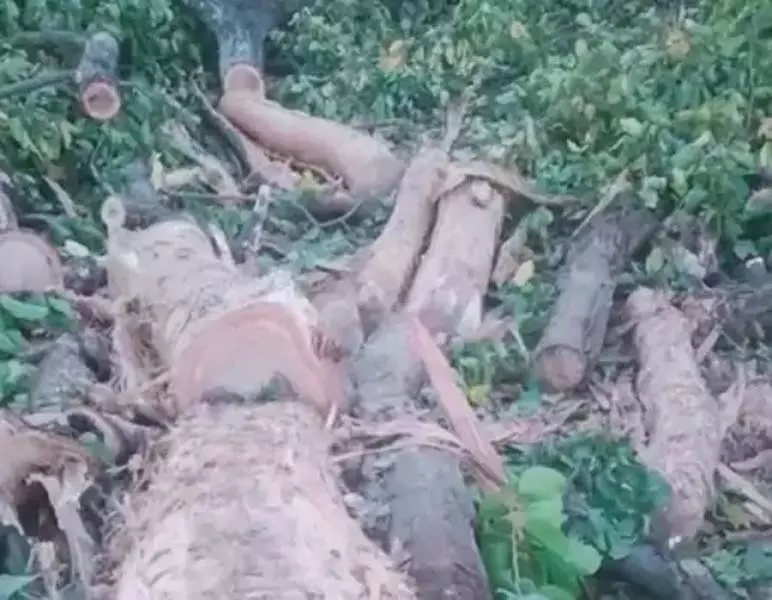
Marwahi: A case of illegal felling of large sarai (sal) trees has come to light in Dhapnipani and Gawarkhoj Plot No. 1086 in Katra, a tribal-dominated area of Marwahi district. Villagers reported finding four-year-old large trees felled, raising serious questions about the safety of forest resources. Villagers and residents submitted a memorandum to the Gaurela-Pendra-Marwahi District Collector, demanding an impartial investigation into the illegal felling and strict action against the culprits. They stated that forest resources are being felled constantly in rural areas. The continued felling of fruit-bearing and lush trees poses a serious threat to the conservation of forest resources.
Residents allege that complaints of illegal felling are made to senior officials of the Forest Department, but the officials simply delay the matter and bury it in files. Often, the higher officials shirk responsibility by claiming the trees belong to the Revenue Department. This has caused widespread anger among residents of the tribal-dominated area, local public representatives, and aware citizens. Deputy Ranger Shivshankar Tiwari of Marwahi Forest Range was questioned about how the Sarai trees were felled and whether action was being taken against them. The Deputy Ranger refused to comment to the media, stating that he was not authorized to provide information on the matter. He further clarified that there was no responsible officer present at the Marwahi Forest Range office to provide information to the media.
Villagers and local environmentalists say that if illegal logging is not stopped, not only will forest wealth be destroyed, but local biodiversity will also be endangered. In addition to Sarai, other green and fruit-bearing trees are also being cut down, disrupting the natural balance. The memorandum also demanded strict legal action against those responsible in such cases and the establishment of an effective monitoring system to protect forest resources in the future. The villagers want the Forest Department and the district administration to prioritize this issue and punish those responsible for the felling. Emphasizing the need to conserve forest resources, local leaders have also appealed to the administration for impartial action. He says that forest wealth is not just government property, but is an important part of the vitality and local economy of tribal dominated areas.