










Warning issued after Modi-Pezeshkian meeting
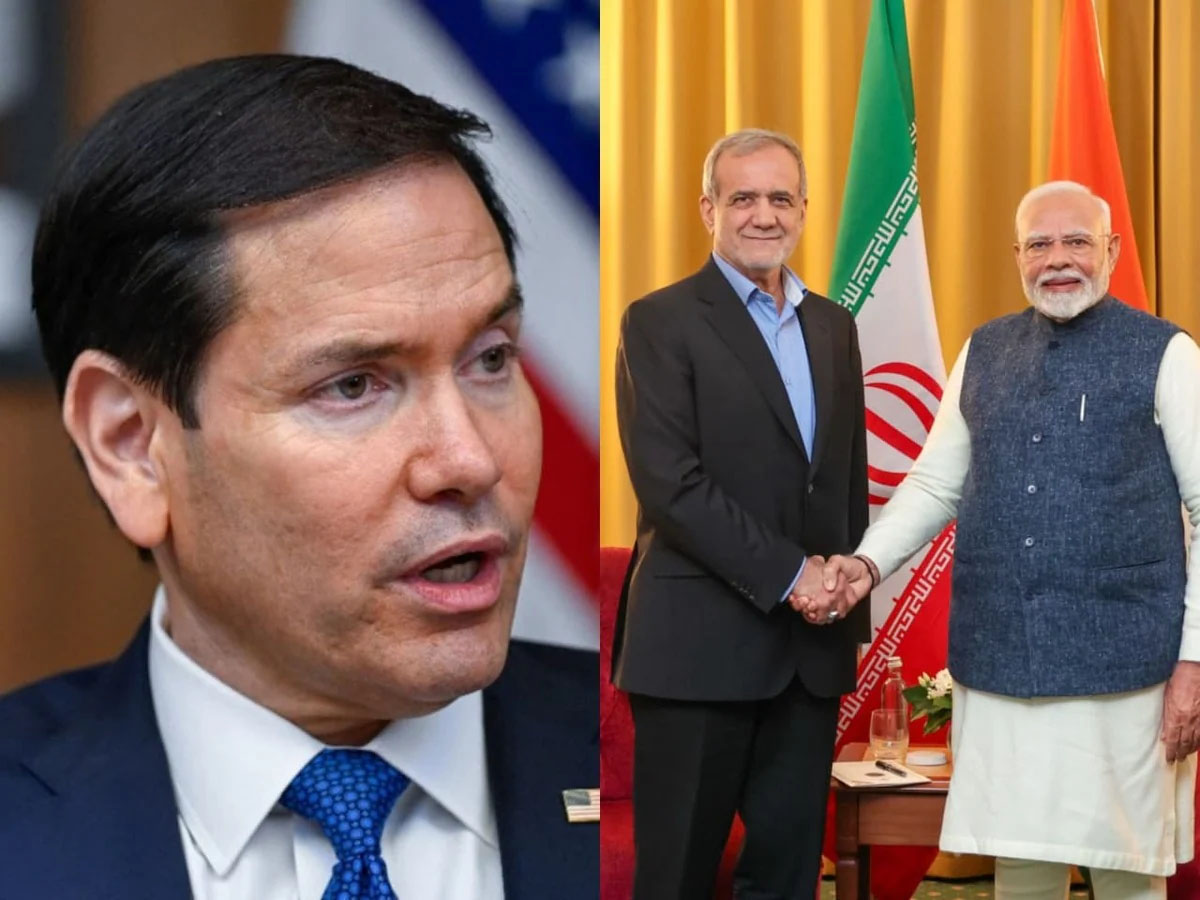
New Delhi. Following the recent meeting between Prime Minister Narendra Modi and Iranian President Masoud Pezeshkian, the US has issued a stern warning regarding economic ties with Iran. US Secretary of State Marco Rubio stated that no country should assist Iran in evading US sanctions or creating new avenues for revenue generation. He warned that nations or entities doing so could face US sanctions themselves.
However, the US Secretary of State did not say that the US was displeased with the Modi-Pezeshkian meeting. On the contrary, he noted that he did not believe negotiations for any new trade agreement between India and Iran were underway. Rubio acknowledged that individual countries might engage with Iran as part of their foreign policy. His objection primarily concerns economic activities that would help Tehran circumvent US sanctions.
The meeting between Prime Minister Narendra Modi and Iranian President Masoud Pezeshkian took place on August 31 in Bishkek, Kyrgyzstan, on the sidelines of the Shanghai Cooperation Organization (SCO) summit. The two leaders discussed bilateral relations as well as the prevailing situation in West Asia. Expressing concern over rising tensions in the region, Prime Minister Modi reiterated India’s stance that issues should be resolved through dialogue and diplomacy.
The issue of maritime trade and freedom of navigation was also prominently raised during the meeting. India emphasized the need to ensure the safety of commercial vessels, seafarers, civilians, and civilian infrastructure. Prime Minister Modi also stressed the importance of continuing efforts to establish lasting peace and stability in the region.
India has also expressed its desire to continue cooperation with Iran on multilateral platforms such as BRICS and the SCO. Prime Minister Modi reiterated the invitation to President Pezeshkian for the BRICS summit to be hosted by India. This indicates that New Delhi intends to maintain diplomatic engagement with Tehran despite the tensions in West Asia. When asked about this meeting, US Secretary of State Marco Rubio stated that he was unaware of any trade agreement between India and Iran. He also clarified that the US would not tolerate activities that assist Iran in evading US sanctions or generating revenue.
The most significant aspect of Rubio’s statement is the warning issued to countries considering continuing economic activities with Iran or establishing new financial channels with it. The US has already imposed comprehensive economic sanctions on Iran, and economic pressure on Tehran has been further intensified amidst recent tensions.
The US argues that any additional revenue gained by Iran should not be used for activities that Washington views as threats to its national security and regional stability. Consequently, the US administration is cautioning other nations and companies regarding transactions involving Iran.
For India, Iran is not merely a key country in West Asia but is also crucial from strategic and connectivity perspectives. The two nations share long-standing trade and diplomatic ties. Iran is also significant in terms of regional connectivity and India’s access to Central Asia.
In this context, amidst the US warning, India faces the challenge of balancing its strategic interests with the international sanctions regime. India has long pursued a foreign policy based on strategic autonomy, emphasizing the maintenance of relations with various global powers in alignment with its national interests.
The meeting between Modi and Pezeshkian took place at a time when tensions in West Asia remain acute. Peace in the region is vital for India, given the large number of Indian citizens living and working in West Asian countries. Furthermore, critical routes for energy supplies and maritime trade pass through this region.
Any disruption, particularly in the Strait of Hormuz, could become a cause for concern for many major global economies, including India. This is why Prime Minister Modi, during his conversation with Pezeshkian, emphasized the importance of maintaining freedom of navigation and trade. Rubio’s warning makes it clear that the US remains firm on its strategy of maintaining economic pressure on Iran. Washington wants to ensure that other nations do not establish mechanisms that would allow Tehran to mitigate the impact of US sanctions. However, Rubio did not confirm any new trade agreement regarding India.
Therefore, rather than directly linking the Modi-Pezeshkian meeting to US displeasure, it is more appropriate to view it within the broader context of US policy toward Iran. For now, the US message is clear: there is no objection to diplomatic engagement with Iran, but economic activities that facilitate the circumvention of sanctions could invite action.
Striking a balance between India-Iran relations and US sanctions policy will remain crucial in the coming days. While the meeting between Modi and Pezeshkian signaled the continuation of diplomatic ties between the two nations, Marco Rubio’s warning underscored that the US is keeping a close watch on economic transactions involving Iran.