










Bhubaneswar Fire incidents in the city raise safety concerns
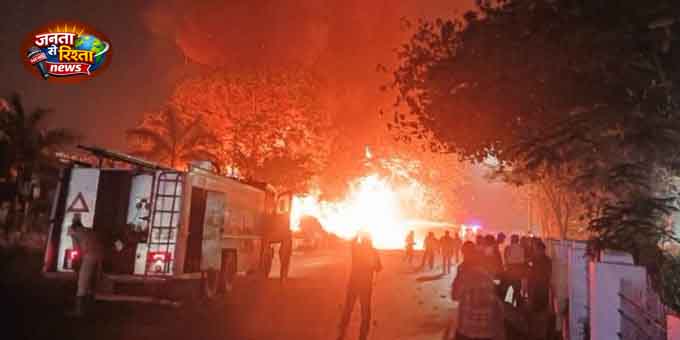
Bhubaneswar: A worrying increase in fire incidents in the capital city over the past few months has raised new concerns about urban fire safety, emergency preparedness, and enforcement of safety regulations. Several parts of the city have repeatedly witnessed devastating market fires, industrial fires, and vehicle accidents. In February, a massive fire broke out in a four-story market complex in the Lingipur area of the city. The fire raged for over 12 hours.
Firefighters struggled to control the blaze. In early January, a massive fire in the Unit-I market destroyed nearly 40 vending kiosks, causing significant financial losses to traders and vendors. This incident once again highlighted the challenges of fire safety and emergency response in crowded markets. In April, a moving truck caught fire near the Palasuni overbridge, causing a major traffic disruption on NH 16 for a long time and raising concerns about vehicular safety and emergency service response on the busy urban corridor.
More recently, on May 16, a fire broke out in a tire workshop-cum-depot in the Mancheswar Industrial Area, sending a thick plume of smoke throughout the area and causing panic among residents and workers nearby. While most of these incidents did not result in any major casualties, the frequent fires have renewed questions about electrical safety, compliance with fire regulations, disaster preparedness, and the overall robustness of the city’s rapidly expanding urban infrastructure.
Sudhanshu Sarangi, Director General of Fire and Emergency Services, stated that many buildings constructed in the 1980s and 1990s lack modern fire safety infrastructure. Sarangi said, “There are many old buildings that were constructed before the current fire safety regulations came into effect.
Many unpermitted buildings do not follow proper safety measures.” He further said, “We appeal to people not to purchase flats or properties that do not have approval from the Bhubaneswar Municipal Corporation and other competent authorities.” Commenting on the matter, city architect Gautam Agarwal said, “Fire safety regulations in Odisha are already stringent, and the fire department maintains strict enforcement standards. Negligence and lack of awareness among users are the main reasons for such frequent incidents.” Agarwal added, “Even a well-designed building with proper fire safety systems can catch fire due to minor negligence or human error.” Agarwal cited poor maintenance as another cause of fires and stressed that awareness campaigns should be conducted in conjunction with enforcement measures.
Sharing his views, urban planner Piyush Raut said, “Odisha has experienced fires in the past, although they were mostly forest-related. Today, rapidly growing and poorly planned urban areas like Bhubaneswar have become hotspots for such incidents.” He added, “Many recent fires are linked to electrical short circuits, infrastructure overload, and excessive storage of flammable materials in densely populated residential and commercial areas.”
Raut said that along with waterlogging, waste management, and traffic congestion, fire safety is becoming a major challenge in cities. He stressed the need for mandatory fire and electrical safety audits in residential complexes, markets, and commercial spaces.