










National workshop on MOOCs held at DAVV; 110 faculty members participated.
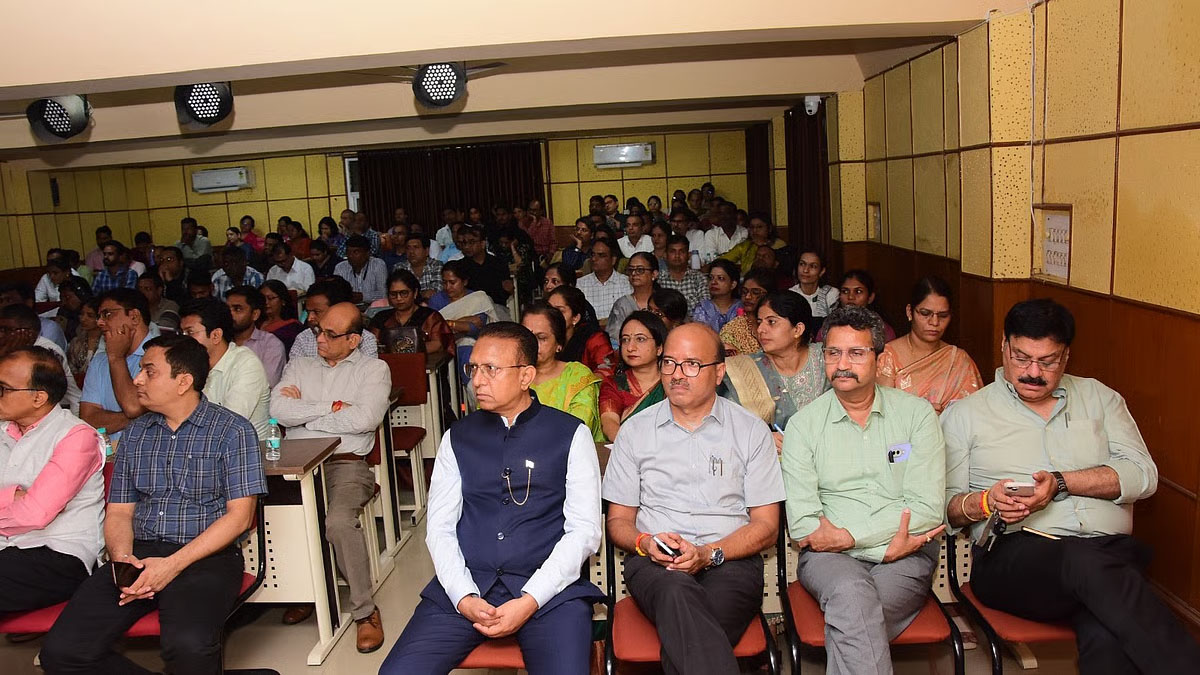
Indore. A one-day national workshop on the implementation of Massive Open Online Courses (MOOCs) in Higher Education Institutions (HEIs) was held on Wednesday at Devi Ahilya University (DAVV). The workshop was organized in collaboration with the Consortium for Educational Communication (CEC) and the Educational Multimedia Research Centre (EMRC). Approximately 110 faculty members from DAVV and various government and private colleges affiliated with universities across Madhya Pradesh participated in the event.
The theme of the national workshop was “Implementation of Massive Open Online Courses (MOOCs) in HEIs under UGC Regulations 2021.” The primary objective of the program was to discuss various aspects related to the effective use and implementation of online courses in higher education institutions and the provision of quality educational content to students through digital mediums.
At the beginning of the program, EMRC Director Chandan Gupta welcomed the participants. He highlighted the evolving nature of online education and the growing role of digital mediums in higher education. Particular emphasis was placed on the shifts in the necessity and acceptance of online education following the COVID-19 pandemic.
Chandan Gupta noted that the use of digital technology in the education sector has surged since the COVID-19 outbreak. During the pandemic, when traditional classroom operations were disrupted, online platforms emerged as a vital link between students and teachers. Subsequently, online education began to be viewed not merely as an alternative arrangement but as an integral part of the regular academic system.
He also shed light on the efforts being made to promote SWAYAM MOOCs. Through the SWAYAM platform, students can access online courses across various disciplines. The initiative aims to provide students with quality courses tailored to their needs and interests while expanding opportunities for digital learning in higher education.
The workshop included discussions on the process of implementing MOOCs in higher education institutions in accordance with UGC Regulations 2021. It sought to explain how universities and colleges can integrate online courses into their academic frameworks and ensure that students derive maximum benefit from them. For the approximately 110 faculty members participating in the event, this workshop served as an opportunity to understand various aspects of online education and MOOCs. With the participation of teachers from both government and private colleges, deliberations were held on the widespread use of digital courses in higher education.
The greatest advantage of MOOCs is that students can study various courses while being largely free from the constraints of location and time. Online courses can also serve as valuable options for students wishing to gain extra knowledge in a specific subject or acquire new skills beyond their regular curriculum.
The role of digital resources is steadily growing amidst the changing landscape of higher education. Integrating online content with traditional classroom teaching helps provide students with supplementary study materials. Features such as video lectures, digital study resources, and online assessments have transformed learning methods.
Institutions like CEC and EMRC play a significant role in this context. The effective use of technology to create and deliver educational multimedia content can enhance the utility of online education. The availability of high-quality digital content enables students in remote areas to access expert teachers and a wide range of courses.
The workshop also placed special emphasis on the role of teachers. Merely having a digital platform available is not enough for the successful implementation of MOOCs; teachers must also understand the structure of online courses, content delivery, student engagement, and assessment processes. Consequently, involving faculty members in such training programs is considered crucial.
Implementing MOOCs in higher education institutions offers students the opportunity to study additional subjects alongside their regular curriculum. It also allows a larger number of students to benefit from the expertise available at various institutions. This characteristic of digital education makes it a vital complement to the traditional education system.
Since the COVID-19 pandemic, universities and colleges have rapidly developed their digital education infrastructure. The shift that began with online classes has now expanded to include digital curricula, virtual learning, and online assessments. In this scenario, systematically integrating MOOCs into the higher education system is viewed as a significant step toward the future of education. This national workshop organized at DAVV aimed to provide teachers with information regarding UGC regulations and the implementation of MOOCs. This will enable teachers to offer better guidance to students at their respective institutions regarding online courses.
The extensive participation of DAVV and its affiliated government and private colleges in the event also demonstrated the growing interest in online education among higher education institutions. Active participation by teachers is essential to deliver quality education to a larger number of students through digital mediums.
One-day national wor…