










Rising heat in the Himalayas increases risk; glaciers melting rapidly due to rising night-time temperatures.
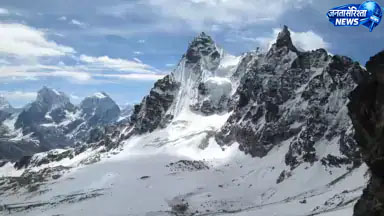
Himalayas: It is generally believed that the impact of heat is most pronounced in the plains; however, recent scientific studies and environmental indicators have raised serious concerns. The Himalayas, often referred to as Asia’s ‘Water Tower,’ are warming rapidly. Most alarmingly, it is not just daytime temperatures that are rising, but nighttime temperatures as well. This shift in temperature is directly affecting Himalayan glaciers, causing their rate of melting to accelerate steadily.
The Himalayan mountain range serves as the source for Asia’s major rivers. The glaciers located here supply water to the Ganges, Brahmaputra, Indus, and several other vital river systems—hence the title ‘Asia’s Water Tower.’ The water needs of millions of people depend, directly or indirectly, on these Himalayan water sources. Consequently, the rapid melting of glaciers could pose a significant challenge to future water security.
Scientists state that due to climate change, the rate of temperature rise in the Himalayan region is exceeding the global average. Rising heat in high-altitude areas has begun to disrupt the natural balance. Regions that previously experienced prolonged periods of low temperatures are now seeing an increase in the number of hot days and warm nights.
Scientists view the rise in nighttime temperatures as a particularly serious issue. Under normal conditions, cooler nighttime temperatures allow snow and glaciers to remain relatively stable. However, when nights also become warmer, the process of snow accumulation is hindered, and the rate of melting intensifies.
The impact of rapid glacial melting is not confined to the mountains alone. Initially, melting glaciers may increase river water levels, raising the risk of events such as flash floods and landslides. However, in the long run, as the size of the glaciers continues to shrink, there is a looming possibility of reduced water flow in the rivers. This could have a direct impact on communities living in the Himalayan region. A large number of people in these mountainous areas rely on agriculture, animal husbandry, and natural water sources. If these water sources are affected, the livelihoods and lifestyles of local residents could face serious consequences.
Environmental experts state that the Himalayas constitute a crucial ecological zone not only for India but for the entire Asian continent; changes occurring here can affect numerous countries. Any significant alteration in the Himalayan ecosystem could impact water resources, biodiversity, and weather patterns.
Rising temperatures are not the sole cause of glacial melting. Deforestation, pollution, increased human activity, and factors like black carbon are also affecting the Himalayan region. Black carbon settles on the snow’s surface and absorbs more solar heat, causing the snow to melt more rapidly.
Experts believe that development projects in the Himalayan regions must be pursued with due regard for environmental balance. Ignoring natural conditions during road construction, tourism expansion, and other activities could exacerbate risks.
Reducing greenhouse gas emissions globally is considered essential to controlling climate change. Simultaneously, there is a need to strengthen monitoring systems in the Himalayan regions, conduct continuous studies on glaciers, and prepare local communities to cope with the impacts of climate change.
Scientists from India and other Himalayan nations are continuously studying changes in glaciers, snowfall patterns, and temperatures. Their objective is to understand the future trajectory of the Himalayan region and determine the necessary measures to address these impacts.
Climate experts warn that the changes occurring in the Himalayas serve as a wake-up call. If effective measures are not taken in time, the consequences will not be confined to mountainous areas alone but could also impact water availability, agriculture, and weather systems in the plains. Currently, rising temperatures and the accelerating rate of glacial melting in the Himalayas remain a major concern for scientists, environmentalists, and policymakers. Safeguarding this vast mountain region—often referred to as a ‘water tower’—is crucial for future generations.